
- TL;DR: Build trust-first relationships, not quick closes.
- AI augments your team, it does not replace meaningful human effort.
- Consultative selling becomes data-informed guidance delivered at scale.
- Automate routine tasks to free time for problem solving with buyers.
- Ethics and privacy remain central to credible AI usage.
In today’s market, buyers expect speed, relevance, and a human touch. This is Relationship Selling in the AI Era, a model where automation handles repetitive tasks and AI surfaces insights, while humans focus on solving real business problems. The goal is to fuse trust with technology so every interaction adds value. When done well, AI amplifies your ability to listen, understand, and co-create solutions with customers.
Relationship Selling in the AI Era: A Practical Guide
The phrase captures a shift from product-centric pitches to problem-solving conversations guided by AI-enabled insights. It centers on trust, empathy, and transparent practice, paired with tools that help you understand buyer context faster and more accurately. This approach is not about replacing reps with robots; it is about giving reps a sharper lens and more time for meaningful dialogue. For teams ready to adopt it, the payoff is deeper engagement and larger, more durable deals.
How AI Drives Relationship Automation
The promise of AI-powered relationship management
AI-powered relationship management uses buyer signals—from content interaction to purchase intent—to tailor outreach. It enables personalization at scale without sacrificing relevance. Reps can prepare for calls with a clear view of a buyer’s goals, constraints, and stakeholders, increasing trust from the first touch. This is where AI trust and privacy controls matter most; buyers respond to transparency about how data is used and protected.
As you implement, focus on AI-driven insights that empower the seller’s narrative rather than dictate it. A practical approach is to couple predictive analytics with structured discovery questions. The result is a guided conversation that surfaces challenges the buyer didn’t articulate at first glance.
Boundaries of automation: trust and human touch
Automation should handle scheduling, data gathering, and routine follow-ups. Sellers then apply judgment to interpret insights, connect them to business outcomes, and co-create solutions. This balance protects the data privacy needs of buyers and maintains the human-centered AI ethos that buyers expect from consultative partners. If a buyer signals concern about data use, switch to a transparent explanation and opt for a human-led deep dive.
Internal teams can reference a relationship operations playbook to ensure consistent, consent-driven outreach across channels. By aligning automation with a clear value proposition, you reduce friction and raise credibility with stakeholders.
The Trust Factor: AI, Data, and Ethics
Trust is earned through reliable, respectful interactions. When AI informs outreach, teams must disclose what data powers recommendations and how it is used. Clear data governance reduces risk and reinforces the perception of a responsible partner. The ethical AI frame includes fairness, accuracy, and accountability—principles that translate into how you engage buyers and how you measure success.
Consider a simple rule: never use automation to pressure a buyer. Use automation to surface questions that guide a conversation toward a problem you can help solve. This mindset turns data into problem-solving signals rather than intrusive nudges. You can build buyer confidence by sharing a concise data-use statement at the outset of any engagement.
For more on building trust with AI, review internal materials on AI trust and ethics. Integrate privacy-by-design into every workflow, and train teams to explain AI inputs and outputs in plain language. When buyers see a clear link between data use and value, relationships deepen rather than erode.
The Consultative Edge: From Pitches to Problem Solving
Consultative selling is the core of Relationship Selling in the AI Era. It shifts the mindset from “what we sell” to “what you need to achieve.” AI supports this shift by surfacing buyer priorities, budget constraints, and success metrics from multiple sources. With this context, reps frame conversations as collaborative problem solving rather than one-sided pitches.
To operationalize, start with a buyer-centric discovery framework that maps stakeholders, their outcomes, and the metrics they care about. Use AI to collect and organize signals, then translate them into a shared hypothesis. When a buyer sees that you understand their business and risks, your consultative stance becomes credible and compelling.
In practice, this means designing playbooks that prescribe problem-first questions and a sequence of value-focused milestones. Link each milestone to a tangible business result and to a data-backed rationale. That alignment turns conversations into joint plans with measurable progress.
Practical Playbook for Leaders
Leaders can accelerate adoption with a concise, repeatable set of steps. Below is a practical framework you can implement in 30–60 days.
- Define buyer signals that matter in your market. Identify content interactions, event attendance, and inquiry patterns that indicate intent.
- Map the buyer journey with AI-assisted insights. Create stages that reflect discovery, validation, solution framing, procurement, and renewal.
- Set guardrails for data use and privacy. Establish consent workflows and transparent data-sharing practices with buyers.
- Empower reps with skills in active listening, framing business value, and storytelling. Train them to translate insights into outcomes.
- Measure outcomes with a consultative metric set. Track time-to-insight, win rate by stage, and post-sale satisfaction tied to relationship health.
- Iterate weekly. Use buyer feedback to refine AI prompts, questions, and playbooks for better alignment with client needs.
As you implement, monitor internal collaboration between sales, marketing, and product. A joint data model ensures everyone speaks the same language about buyer problems and success criteria.
Visualization and Learning: How to See the Value
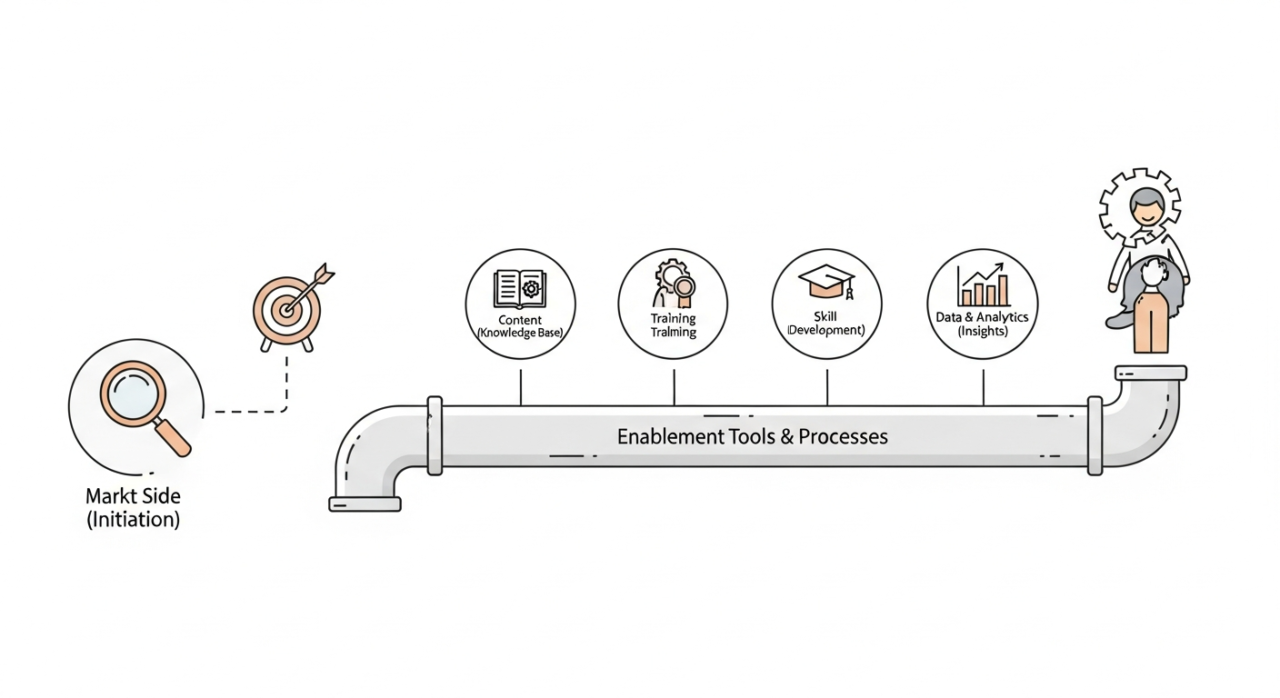
A practical visual is a two-column infographic that maps activities against outcomes. The left column shows automated tasks such as data enrichment, meeting scheduling, and follow-ups. The right column shows human engagements like exploratory conversations and co-creating proposals. Arrows connect AI outputs to human actions and final outcomes, with a caption that highlights the measurable business impact.
Such visuals help teams align on responsibilities and demonstrate ROI to executives. They also provide a clear narrative for buyer stakeholders about how technology enhances, rather than replaces, the human element.
In addition, consider an example image that illustrates buyer intent signals across touchpoints and how reps respond with tailored messaging. This kind of visual supports training and onboarding for new team members.
Conclusion: Embrace Relationship Selling in the AI Era with Intent
Relationship selling in the AI era is not a replacement for human judgment. It is a discipline that couples the reliability and speed of AI with the empathy and curiosity of skilled sellers. The most successful teams will design consent-driven processes, protect data privacy, and keep the buyer’s business outcome at the center of every interaction. When you prioritize trust, transparency, and problem solving, AI becomes a powerful amplifier of your consultative selling capability.
If you’re ready to start, begin with a small pilot that tests AI-assisted discovery, personalized outreach, and a measurable improvement in cycle time and win quality. Use the pilot to refine your risk controls and your storytelling—turning insights into shared value for buyers and your business alike.
To learn more, explore related resources: sales enablement basics, AI in sales trends, and relationship operations for scalable execution.