TL;DR
- Turn call recordings into coaching tasks without drowning managers in data.
- Extract objections, competitor mentions, and buying committee roles from transcripts to focus coaching on what actually moves deals forward.
- Generate targeted coaching tasks and follow-up drafts that align with pipeline stage and rep seniority.
- Calibrate AI output with guardrails and human review so automation enhances judgment, not replaces it.
Sales teams rely on insight to coach effectively. AI can turn every customer call into a precise coaching moment by analyzing transcripts, not just numbers. This approach—call coaching with AI—maps what happened on the call to concrete next steps for reps and managers. By focusing on actionable signals, teams can raise win rates while keeping coaching scalable.
In practice, the process starts with the transcript, moves through signal extraction, and ends with a set of practical tasks and drafts. The goal is not to replace human judgment but to automate repetitive, data-heavy work so managers can spend time on high-value guidance. The result is a repeatable coaching engine that accelerates reps’ progress along the pipeline.
Call coaching with AI: Translating transcripts into next-best moves
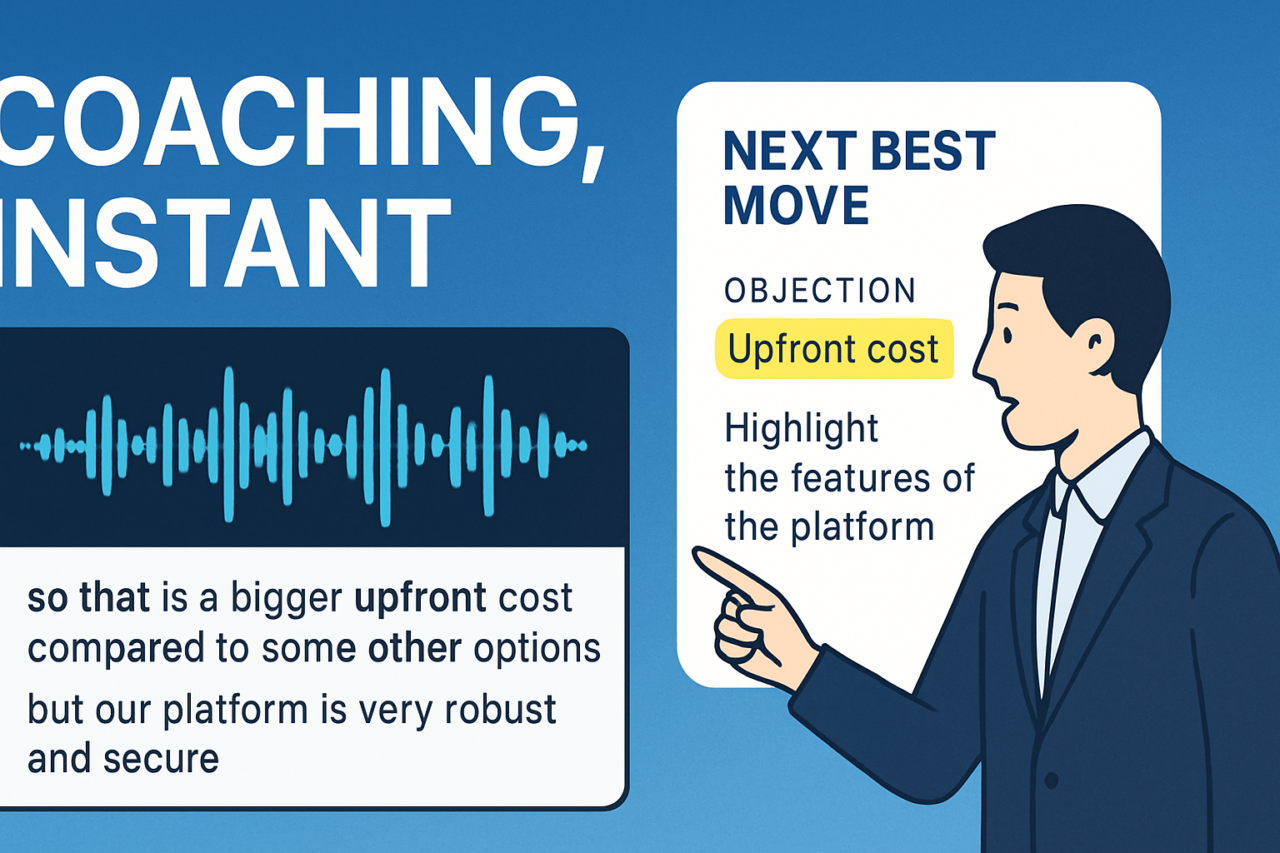
Transcripts contain a rich mix of objections, questions, and stakeholder dynamics. The challenge is to distill those signals into repeatable coaching moments. The strongest systems identify three signal families that reliably predict next steps: objections from the buyer, mentions of competitors, and the makeup of the buying committee. They then translate those signals into coaching tasks and follow-up drafts that are easy to act on.
First, establish clear signals you will track. Objections to price or timing are common friction points. Competitor mentions reveal where a prospect is tempted to switch and why. The buying committee details tell you who must be engaged and when. By standardizing how you capture these signals, you create a dependable feed for coaching and for measurement.
Extracting objections
Objections are not random. They map to specific sales motions. The AI tags each objection by category—budget, timing, risk, authority, or need—and suggests the most effective counter-moves from your playbooks. This helps reps practice consistent, repeatable responses and helps managers build a library of practice scenarios that cover common roadblocks.
Identifying competitor mentions
Competitor mentions give context about buyer hesitations. The AI flags names, records what was said about each option, and notes strengths or gaps in your value proposition. With this data, coaching can focus on messaging that differentiates your offering, reduce overpromising, and sharpen competitive positioning in conversations without relying on memory alone.
Mapping buying committee roles
Most buying decisions involve multiple stakeholders. The transcript reveals who spoke, who needs to be engaged, and who may approve the next step. The AI captures roles such as the economic buyer, technical buyer, and user champion, along with influencers. This enables reps to tailor outreach and prepare the right next steps—such as a joint call with the decision-makers or a targeted ROI brief for the economic buyer.
From insights to coaching tasks and follow-up drafts
Signals are only the starting point. The next step is turning insights into actionable coaching tasks and ready-to-send follow-ups. The AI generates task lists that align with the deal stage and the rep’s development needs. Tasks can range from role-play drills to refined outreach templates and discovery checklists.
Creating targeted coaching tasks
Example coaching tasks include: 1) Role-play a 60-second price objection rebuttal; 2) Build a one-page ROI summary to share with the economic buyer; 3) Draft a joint outreach email to engage the technical and economic buyers; 4) Update the discovery checklist with a targeted question set for the next call. Each task is assigned to a specific owner and given a deadline, making progress visible in your CRM or LMS.
Drafting follow-up drafts
The AI drafts follow-up emails and calendar invites that reflect the next-best move. Language is tailored to the buying roles and stage in the pipeline, preserving your brand voice while saving time. Managers review and refine before sending, ensuring a human touch remains central to the interaction.
Calibration and guardrails: ensuring AI supports, not replaces, judgement
AI should amplify human judgment, not replace it. Establish guardrails that prevent over-automation and misinterpretation. Define confidence thresholds for AI-driven signals. If the system is uncertain about a signal, route it for human confirmation before generating coaching tasks. A light, weekly human-in-the-loop review of a sample of AI outputs helps maintain accuracy and trust.
Guardrails and quality rubrics
Set clear criteria for coaching quality: relevance to the current deal, alignment with buyer roles, and consistency with the company’s messaging. Ensure tasks are specific, time-bound, and measurable. Use simple rubrics to score the output, such as relevance, completeness, and actionability.
Human-in-the-loop workflow
Design a workflow where managers validate AI-generated coaching tasks before dissemination. Schedule regular calibration sessions to compare results with real outcomes. This keeps the system accurate and trusted, while still delivering scale and speed.
Practical example: turning a single call into a coaching plan
Scenario: A rep speaks with a mid-market buyer about budget and timing. The transcript reveals several signals. Objections include price concerns and timing risks. A competitor is mentioned as offering a lower upfront price. The buying committee comprises an economic buyer and a technical buyer, with a user champion lending support to the case. The next step is a joint call with the economic and technical buyers within five days.
- AI-extracted signals: price objection, timing objection, competitor X mentioned, economic buyer on the line, technical buyer engaged.
- Coaching tasks generated: role-play price rebuttal; ROI one-pager for the economic buyer; joint outreach to engage both buyers; discovery questions tailored for technical buyer needs.
- Follow-up drafts created: value-focused email to the buyer with a proposed joint call time; calendar invite templates; a concise internal note to share with the buying committee.
With these outputs, the rep has a clear practice path and a concrete post-call plan. Managers can see progress in the coaching task board and CRM notes, ensuring accountability and continuous improvement.
Visual: from transcript to next-best move
Recommend a visual that accompanies this approach: a Call Analysis Dashboard that highlights key signals by deal. The dashboard shows objections by category, competitor mentions with trend lines, and a heatmap of recommended next steps by deal stage. Purpose: provide a quick, actionable view for coaching conversations and to link insights with the rep’s daily workflow in the CRM. A simple diagram can show how a transcript feeds signals into tasks and drafts, then into calendar invites and playbooks.
Practical tips for deployment
- Run a focused pilot with one sales segment to validate ROI and learn the right signals to track.
- Define signals upfront before turning on automation to avoid noisy outputs.
- Integrate with your CRM so coaching tasks appear in the rep’s workflow and are easy to act on.
- Preserve human oversight to ensure tone, compliance, and brand alignment remain intact.
Internal links to related resources
For deeper guidance, explore related resources such as AI-driven sales coaching: best practices and From transcripts to insights: practical workflows.
Conclusion
Connecting transcripts to next-best moves creates a scalable coaching program that boosts coaching velocity without sacrificing quality. When used with guardrails and human review, AI-powered insights translate into concrete actions that advance deals, shorten sales cycles, and strengthen reps’ skills. Embrace the approach as a partner in coaching, not a substitute for human judgment.
Next step: start with a pilot, define your signals, and build a shared coaching library. Your team can unlock faster improvement across the pipeline by turning every call into a precise, actionable coaching moment.