
TL;DR
- Align RevOps and CS Ops around renewals with a unified risk model.
- Instrument signals from product usage, support tickets, QBR outcomes, and billing risk.
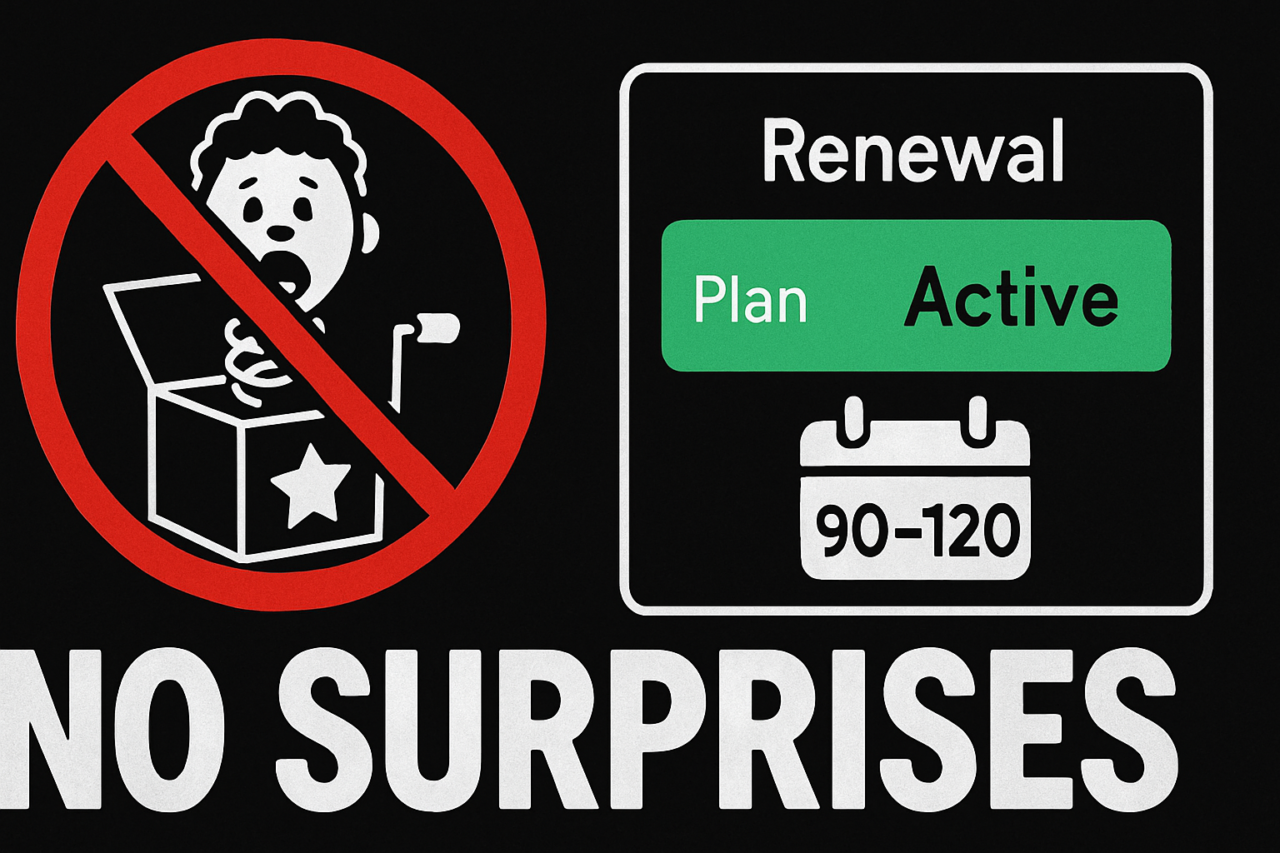
- Trigger renewal playbooks 90–120 days before expiration for proactive outreach.
- Map fields precisely, assign clear ownership, and automate workflow.
- Turn risk signals into a coordinated renewal plan that reduces surprises.
In modern SaaS organizations, renewals fail when warning signs arrive late. The The ‘No Surprises’ Renewal Process: RevOps Meets CS Ops aims to shift that moment closer to the front of the cycle. By stitching data from product, support, finance, and customer success, teams uncover renewal risk early and act with precision. This approach is not about random alerts; it’s a structured, repeatable workflow that starts 90–120 days before renewal and ends with a committed plan and a confident customer at renewal time.
The ‘No Surprises’ Renewal Process: RevOps Meets CS Ops
At its core, this process is a cross-functional operating model. It blends RevOps leadership with CS Ops discipline to create a single source of truth for renewal health. The goal is early detection and actionable response, not last‑minute firefighting. You’ll design a risk model that ingests signals from multiple data streams, assigns ownership, and triggers a playbook that coordinates product, support, finance, and field teams.
To make this practical, the model must be actionable. It needs clear field mappings, defined owners, and a workflow that automatically moves a renewal from risk detection to a coordinated plan. When your teams use the same scoring and the same playbooks, you reduce friction and eliminate the surprise factor at renewal time. The approach is paired optimization: optimize the product experience for retention while aligning incentives across teams to protect the revenue.
Key signals to instrument
The renewal risk model rests on four families of signals. Each signal is valuable on its own, but together they create a robust view of health. You don’t need every signal at full depth from day one; you incrementally enrich the model as data quality improves.
- Product usage signals: login frequency, feature adoption, time-to-first-value, peak usage versus plateau, and usage decay before renewal. A sudden drop in core usage often foreshadows disengagement and higher churn risk.
- Support tickets: open count, severity, time-to-resolution, recurring issues, and sentiment in ticket notes. Recurrent issues indicate a negative customer experience path that can derail a renewal.
- QBR outcomes: feedback captured during quarterly business reviews, agreed milestones, and risk flags raised by the customer during strategy discussions. Positive QBRs reduce risk; missed commitments increase it.
- Billing risk: payment method expirations, failed payments, contract amendments, price changes, and renewal timing. Billing friction often triggers a renewal pause or postponement if not managed early.
These signals feed a renewal risk model that scores accounts on a 0–100 scale and flags those needing attention. The model should be designed for transparency and actionability, with thresholds tailored by segment and ARR size. In practice, you’ll use a blend of deterministic rules (e.g., payment failed in the last 30 days) and probabilistic indicators (e.g., usage decline with high ticket support issues).
For a practical reference, see how Renewal Ops framework integrates with CS Ops. This article builds on that foundation by detailing field mapping and workflow that turn risk detection into a coordinated plan. You’ll also find value in the CS Ops overview CS Ops 101, which explains how CS plays a central role in renewal health.
Field mapping and data ownership
Effective field mapping ensures every data point lands in the renewal model with clear provenance. Start with a minimal, phased map and expand over time. Core fields include:
- Account and subscription: account ID, contract ID, renewal date, ARR, term length.
- Usage: last login date, active seats, feature usage metrics, time-to-value metrics.
- Support: ticket count in period, top issue types, average resolution time, sentiment score.
- QBR: QBR score, risk flags raised, milestones achieved, customer score.
- Billing: payment method status, last payment date, amount due, renewal terms, discount approvals.
Ownership should be explicit. A recommended model is:
- RevOps owner: owner of the renewal risk model, data quality, and governance across sources.
- CS Ops owner: owns the customer health narrative, QBR outcomes, and post-renewal CS actions.
- Finance owner: ensures billing data integrity and early flagging of payment risks.
- Sales/Account Owner: maintains the renewal strategy, negotiates terms, and leads customer-facing outreach when risk emerges.
With ownership defined, you can create a clean data contract: who updates which field, how often, and where exceptions are logged. This clarity prevents gaps and reduces the time to action when risk is detected.
From signals to a renewal risk model
Turning signals into a model requires a practical data pipeline. The pipeline should be:
- Ingestion-first: pull data from product analytics, ticketing systems, CRM, and billing systems.
- Normalized: standardize fields and normalize time windows so signals from different sources align.
- Scored: apply a scoring logic that weighs signals by reliability and impact on renewal health.
- Actionable: surface risk with crisp, next-step recommendations to owners via automated playbooks.
For technical depth, see our notes on Billing risk modeling and Product usage signals. The goal is a single view where each account shows a risk score, the contributing signals, and the recommended next moves.
In practice, you’ll often implement a 90–120 day window for renewal planning. This cadence gives time to run proactive outreach, adjust terms, or address blockers before the renewal date. The cadence also aligns with quarterly business rhythms and executive QBRs, improving executive alignment and sign-off efficiency.
Workflow and playbooks: turning risk into coordinated action
Risk detection is only useful if it starts a reproducible workflow. Design playbooks that activate when a renewal risk crosses a threshold. Each playbook should specify owners, steps, timing, and success criteria. A practical set of playbooks might include:
- Outreach playbook: triggered by moderate risk; includes a personalized customer story, a value recap, and a proactive renewal discussion scheduled 60–90 days before renewal.
- Product optimization playbook: triggered by usage decline; CS and Product collaborate to accelerate value realization in the remaining term, including onboarding nudges for underutilized features.
- Billing and terms playbook: triggered by billing risk; finance and sales coordinate to secure payment methods, adjust payment terms, or offer revised pricing with approved discounts.
- Escalation playbook: triggered by high risk or critical issues; executive sponsorship and cross-functional reviews ensure an accepted renewal path and risk mitigation plan.
Each playbook should include a clear owner matrix, a 2–4 week cadence of updates, and a documented outcome. The aim is to replace ad hoc outreach with timely, coordinated actions that customers perceive as proactive and helpful, not transactional pressure.
To visualize how signals flow into playbooks, consider a simple dataflow chart. It starts with data ingestion (usage, tickets, QBRs, billing), moves to the renewal risk scoring model, and ends with automated triggers that instantiate the appropriate playbook. A well-designed chart helps executives see the full lifecycle from signal to renewal decision.
An actionable example: a mid-market SaaS renewal
Company A uses a mid-market pricing model and relies on strong product usage to justify ongoing spend. Six months before renewal, the usage signal shows a 25% drop in core features, two high-priority support tickets remain open, and a billing alert shows a payment method approaching expiration. The renewal risk score climbs from 20 to 66. The outreach playbook triggers first: a customer success manager (CSM) schedules a value-focused call, a renewal price hold is offered, and an executive sponsor is looped in for potential concessions. Meanwhile, the product optimization playbook routes a targeted onboarding sequence to increase feature adoption. Finally, finance executes a billing risk playbook to secure a payment method and confirm renewal terms. By day 90, the customer agrees to renew under updated terms with a plan to address the root causes observed during the call. No last-minute surprises, no churn, just a strengthened relationship and a preserved ARR.
Such a scenario demonstrates how The ‘No Surprises’ Renewal Process: RevOps Meets CS Ops operationalizes risk signals into concrete steps. The end result is a renewal that feels collaborative and well-supported, rather than reactive and stressful for the customer.
Practical visuals to support understanding
We recommend a dataflow diagram that maps each signal source to the risk model and then to the playbooks. This visual helps stakeholders quickly see who owns what data, when signals are evaluated, and how playbooks cascade through the organization. It also supports onboarding for new team members and provides a blueprint for future automation. In practice, teams often pair the diagram with a dashboard that surfaces current risk scores by segment and ARR band, making it easier to prioritize renewal efforts.
For readers exploring implementation details, review how Renewal Ops framework complements the CS Ops approach. You’ll find practical guidance on governance, data quality, and cross-functional ceremonies that sustain momentum across renewals.
Implementation tips and best practices
Use these practical guidelines to operationalize The ‘No Surprises’ Renewal Process: RevOps Meets CS Ops:
- Start with a minimal viable map: identify 4–6 core signals and the fields that drive them. Expand gradually as you prove value.
- Define clear owners: assign accountability for data quality, risk scoring, and action steps. Document ownership in a living RACI chart.
- Automate importantly, humanize where it matters: automate data ingestion and scoring, but keep human-led communications for high-impact conversations.
- Align incentives across teams: ensure renewal success is a shared objective, not a win for one function at the expense of others.
- Iterate the playbooks: review outcomes after each renewal cycle, capture learnings, and adjust thresholds and steps accordingly.
As you begin, publish a lightweight playbook and establish a monthly cadence for data quality checks and score calibrations. This steady rhythm makes the renewal process predictable and scalable across product lines and customer segments.
To accelerate adoption, embed the approach into your existing renewal rituals. Tie risk flags to QBR agendas and renewal-ready reviews. This alignment reduces ambiguity and ensures leadership sees a consistent, data-driven path to renewal success.
Conclusion: toward a proactive renewal culture
The No Surprises Renewal Process: RevOps Meets CS Ops is not a one-off project. It’s a cultural shift toward proactive health management for renewals. By instrumenting usage, support signals, QBR outcomes, and billing risk, you create a risk model that triggers coordinated playbooks well before renewal date. Clear field mappings, explicit ownership, and a robust workflow turn risk detection into a tangible plan that customers appreciate—and that protects revenue. The result is a renewal cycle built on trust, clarity, and measurable outcomes.
If you’re ready to start, begin by mapping data fields across four signal sources, assign owners, and draft two simple playbooks for 90-day triggers. Then expand incrementally, harmonize your dashboards, and schedule a monthly renewal health review. The goal is consistent renewal performance and lower churn through deliberate, preemptive action rather than surprise-driven reactions.
For further reading and practical templates, explore related content on Renewal Ops framework and CS Ops best practices. Your next renewal cycle can be smoother, smarter, and more collaborative than ever.