

TL;DR
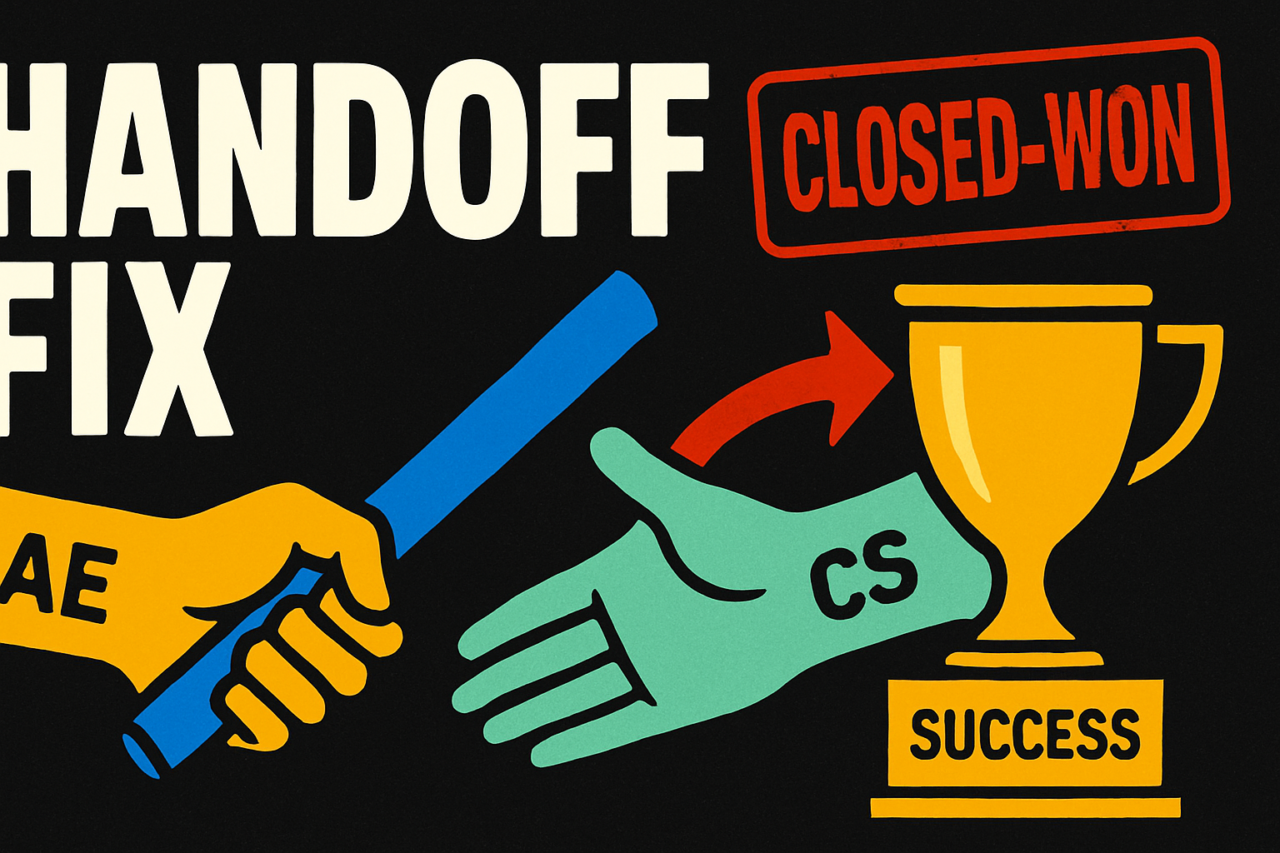
- Closed-won is a milestone, not the outcome. The handoff starts before signature.
- Capture essential data before signing to enable smooth onboarding.
- Use a clear handoff playbook to trigger onboarding tasks and assign owners.
- Automate time-to-first-value and define success criteria to reduce implementation churn.
Revenue Handoffs: From Closed-Won to Successful Onboarding — What it means
In revenue operations, the moment a deal closes marks the start of value realization. Revenue Handoffs: From Closed-Won to Successful Onboarding is a cross-functional process that begins before signature and continues through onboarding and customer success (CS). The goal is to align sales, onboarding, and CS around a shared data set, a set of tasks, and measurable outcomes that accelerate value for the customer and create a durable path to renewal.
Think of this as post-sale alignment. It requires a single source of truth and explicit ownership. When handoffs are smooth, customers realize value faster and renewal probability rises. For teams, it reduces back-and-forth, rework, and churn risk. For practitioners, it provides a repeatable framework you can scale across segments.
Capture Before Signature: What to collect
Before the deal signs, capture a compact data bundle that will power onboarding. This is a handoff checklist for AEs, SEs, and the onboarding team. Required fields include:
- Account and contact details, including buying committee and key stakeholders
- Use case and the customer’s success metrics
- Proposed solution scope, integrations, and data migrations
- Baseline data, current systems, data quality, and process maturity
- Value timeline, expected time-to-value, and renewal intent
- Signature-ready terms that affect onboarding (data security, compliance)
Make this data available in the CRM handoff checklist and ensure visibility to Sales Ops and CS teams.
Triggers for Onboarding Tasks
Handoffs should trigger onboarding work the moment signature appears and financing is secured. Key triggers include:
- Contract execution logged in CRM or contract system
- Customer success kickoff assignment
- Data migration tasks created and scheduled
- Product configuration and integrations queued in the onboarding tool
- Security and compliance checks completed
Each trigger maps to concrete tasks with owners, due dates, and dependencies. This reduces ambiguity and ensures actions flow in a logical sequence.
Playbooks for Kickoff, Success Criteria, and Time-to-First-Value Automation
A kickoff agenda sets the engagement tone and clarifies responsibilities. A typical agenda includes:
- introductions and roles, with each owner stating their success criterion
- customer goals, data requirements, and success metrics
- technical readiness review and risk flags
- timeline and milestones for onboarding, adoption, and renewal
- next steps and owners for each action item
Define success criteria early. Examples include:
- Data mapping completed within 10 business days
- First integration test successful by day 14
- User adoption rate of 60% in the first 30 days
- Customer achieves measurable value by the 90-day mark
Time-to-first-value (TTFV) automation links milestones to actions in your stack. Typical automations include:
- Automated task creation from contract status updates
- Auto-notifications to stakeholders when milestones are reached
- Data migration progress tracked in a dashboard
- Usage-based alerts signaling early product value
For practical templates, see our onboarding playbooks and TTFV automation guide.
Reducing Implementation Churn
Implementation churn happens when teams operate in silos or data is incomplete. A robust handoff process reduces churn by ensuring visibility, ownership, and accountability. Key strategies include:
- Assign a single handoff owner with explicit SLAs
- Maintain a single source of truth in CRM and onboarding tools
- Use a documented handoff checklist that travels with the deal
- Regularly review open items and risk flags with a CS-led post-sale review
Operationalize this by linking sales, onboarding, and CS stages with stage gates that require completion before moving forward. This creates a predictable path from close to value and renewal.
Common Pitfalls to Avoid
- No single owner or shared accountability
- Incomplete data or inconsistent data fields across systems
- Ambiguous acceptance criteria and success metrics
- Delays in triggering onboarding tasks after signature
Segmented Playbooks: SMB vs Enterprise
Customize playbooks by segment. SMB deals benefit from faster ramp and lighter data requirements, while Enterprise deals require deeper integration planning, governance, and change management. In both cases, keep a crisp handoff timeline and a validated data bundle to avoid churn.
Practical Example: SaaS Onboarding in Action
Consider a mid-market SaaS company selling a data integration platform. The AE captures a use case and reporting requirements during negotiation. The onboarding handoff begins immediately after signature, with a handoff data bundle in the CRM that includes:
- Customer name, primary contact, and buying committee
- Target pain points and measurable success metrics
- Required connectors or APIs and hosting details
- Defined first-value metric, such as data sync latency reduction
The onboarding team schedules a kickoff with the customer within 3 business days and assigns owners for data migration, integration setup, and user enablement. The CS team monitors usage and triggers follow-up actions if adoption lags. If early adoption stalls, a root-cause analysis is performed and a remediation plan is added to the backlog.
In this scenario, the customer sees rapid value, the team reduces rework, and Sales can plan expansion conversations around concrete wins rather than assumptions.
Measurement, Automation, and Iteration
Track key metrics that reflect the health of revenue handoffs. Suggested metrics include:
- Time-to-first-value (TTFV), from signature to measurable impact
- Onboarding task completion rate and SLA adherence
- Adoption rate and feature utilization in the first 90 days
- Churn risk indicators and renewal timing
Automate status updates and task routing using workflows that begin at contract execution and continue through CS onboarding. This creates a repeatable rhythm and reduces manual handoffs. Regular retrospectives help refine the data bundle and task triggers as you scale.
For more on related topics, check our Sales Ops vs RevOps guide and our CS playbooks.
Roadmap to Scale Revenue Handoffs
To scale this approach, adopt a three-step roadmap:
- Standardize a data bundle and handoff checklist that travels with every deal
- Automate trigger-based onboarding tasks and set clear SLAs
- Institutionalize a post-close review with CS and onboarding to close any gaps before renewal
Over time, refine your playbooks based on outcomes across segments. Use quarterly benchmarks to measure progress and adjust ownership models as needed. This progression turns a one-off handoff into a durable, scalable capability.
Visualize the Handoff
We recommend a flowchart that shows the lifecycle: AE completes the sale → Handoff data bundle is created → Onboarding kicks off → CS takes over with onboarding plan → Customer achieves first value. A simple diagram helps align teams and set expectations. Consider an infographic with owners, data, and milestones. See a sample  and use it in internal dashboards to maintain clarity.
Conclusion: Take Action on Revenue Handoffs
Revenue Handoffs: From Closed-Won to Successful Onboarding is about turning a milestone into a durable outcome. Start with a minimal data bundle, a clear owner, and a kickoff that defines success. Align the sales, onboarding, and CS teams around a shared playbook and measurable milestones. Then automate the handoff to accelerate time-to-value and cut churn. This approach scales as you grow, enabling repeatable onboarding and stronger, longer-lasting customer relationships.
Ready to implement? Start with the handoff checklist and align your teams across stages. For more insights, explore our related content on Revenue Ops framework and onboarding automation.