- Link AI spend to time saved, pipeline created, and risk reduced.
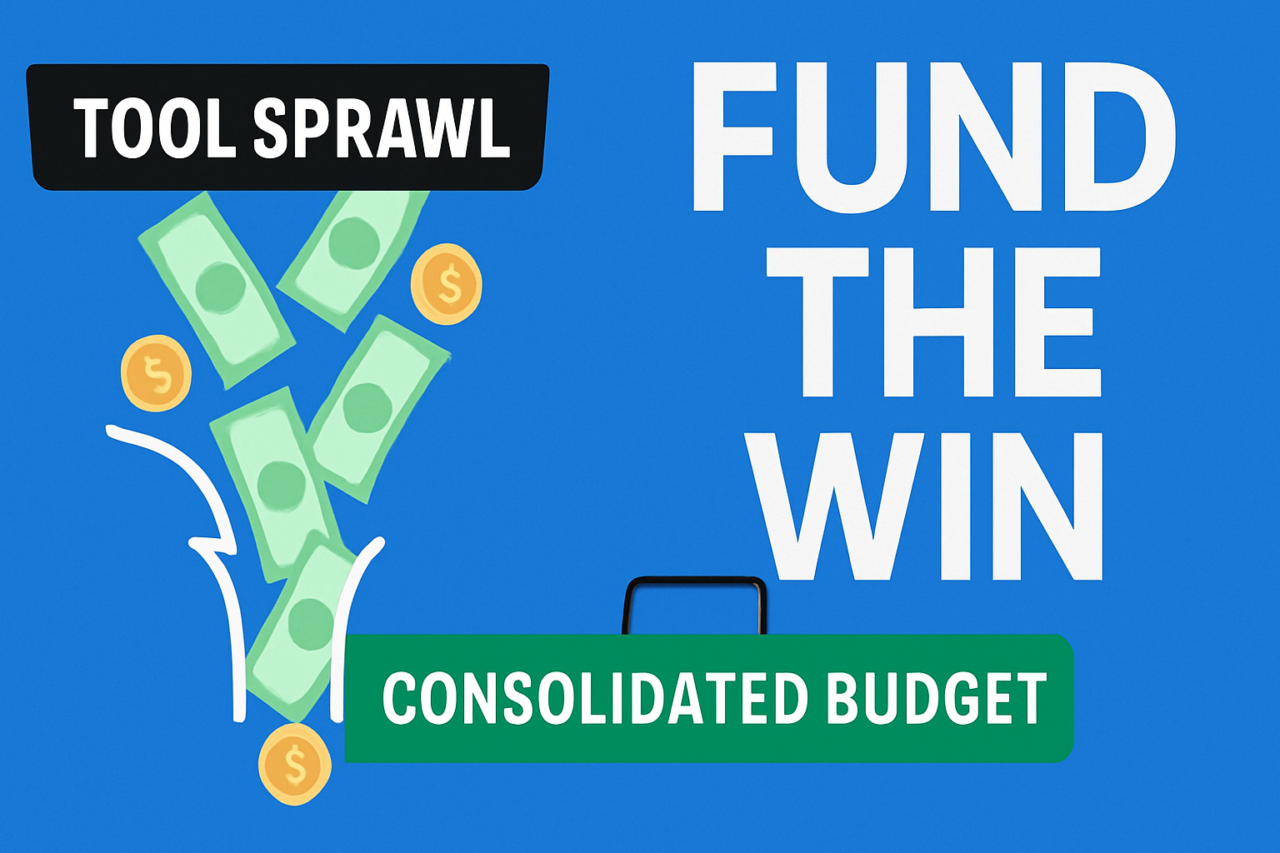
- Consolidate tool spend into one strategic line item.
- Use a business-case template to justify investments.
- Track value with time-to-value metrics.
Leaders in RevOps face a recurring hurdle: budgets spread across teams, tools, and procurement cycles. AI investments fail when there is no clear link to value. This guide on AI Budgeting for RevOps: How to Fund Systems That Save Time explains how to fund AI systems by tying spend to time saved, pipeline created, and risk reduced. By tying budget decisions to observable outcomes, finance and RevOps can move faster and justify investments to leadership.
AI Budgeting for RevOps: How to Fund Systems That Save Time
In practice, the goal is to map each AI tool to a measurable outcome. The core concept is that AI spend is an enabler of time saved, revenue acceleration through a stronger pipeline, and risk reduced, not a pure cost. This framing helps finance review cycles see AI as an investment that compounds value over time.
What AI Budgeting Is and Why It Matters
AI budgeting aligns spending with outcomes. It requires a clear definition of the problem, the expected output of each tool, and how you will measure success. Without this clarity, tools may sit idle or be underutilized, and the ROI becomes hard to prove. For RevOps, this means every tool has a purpose tied to time saved, pipeline created, or risk reduced.
Frame the spend by outcome: time saved, pipeline created, and risk reduced
To start, define three outcome metrics: time saved, pipeline created, and risk reduced. Then tie each investment to one or more metrics. For example, a data-cleaning AI tool saves 10 hours per week of rep time; a forecasting model increases forecasted pipeline by 8%; a data-quality workflow reduces compliance risk by 25%.
Practical framework: budgeting by outcome
Time saved
Identify the processes that AI will improve and estimate the weekly hours saved. Translate hours into a dollar value using fully loaded labor rates. Set a cap on time-to-value; require a tangible reduction in manual work before triggering a funding milestone. A simple rule: if you save more than 20 hours per week, allocate a percent of savings to reinvestment in AI.
Pipeline created
Quantify how AI-enabled actions convert into pipeline. Attribute increments to specific tools and ensure consistent attribution models. For example, AI-assisted lead routing increases qualified opportunities by 12% quarter over quarter. Tie the incremental pipeline to a forecast and to revenue impact.
Risk reduced
Focus on data quality, security, and governance. Measure risk reduction via error rate improvements, compliance check pass rates, or data duplication declines. Assign a monetary value to risk reduction where possible, or a risk-score improvement to inform risk-adjusted budgeting decisions.
Business-case template for AI budgeting
Use this template to capture the rationale for AI investments in RevOps. It keeps finance and ops aligned and supports a single line item in the budget.
- Objective: Define the outcome you want from the AI investment (for example, reduce manual data entry by 60%).
- Scope: List the AI tools and processes included (for example, AI-driven forecasting, data enrichment, and automated routing).
- Outcome metrics: Time saved (hours/week), pipeline impact (%), risk reduction (data quality/compliance).
- Costs: One-time setup, licenses, ongoing subscriptions, training, and internal hours.
- Funding approach: Propose a single line item and governance rules for optimization and sunset criteria.
- Timeline: Milestones and expected value realization dates.
- ROI model: Time-to-value, ROI, and sensitivity analysis if applicable.
Example (illustrative): Objective: automate lead routing; Time saved: 40 hrs/mo; Pipeline impact: +8% quarterly; Costs: $120k/year; Budget line: AI Enablement for RevOps; Time-to-value: 3 months.
Consolidating tool spend into one strategic line item
Fragmented AI budgets dilute accountability and slow value realization. Follow these steps to consolidate spend into one strategic line item.
- Inventory all AI-related tools and licenses across teams.
- Map each tool to outcome metrics and identify redundant capabilities.
- Create a single budget line item such as AI Enablement for RevOps and remove overlapping licenses.
- Establish governance: quarterly reviews, sunset criteria, and a clear champion from finance and RevOps.
- Communicate the consolidation plan with stakeholders and update internal dashboards (see our RevOps budgeting guide for details).
Visual aid: a simple chart showing total AI spend by tool before consolidation and the single-line-item after consolidation, alongside time-saved and pipeline metrics. Visuals help leadership grasp value quickly. You could embed a chart at  .
.
Practical example: a mid-market RevOps setup
Consider a mid-market company with six AI tools: CRM integration, marketing automation, data enrichment, chat-based support, forecasting, and analytics. Prior to consolidation, each tool lives on its own budget line. After adopting a single AI Enablement line item, the team tracks time saved (hour reduction), pipeline growth (MQL-to-SQL conversion rate), and risk reduction (data quality score). The result is a 12–15% improvement in efficiency and a measurable lift in forecast accuracy, funded by a single, predictable budget. For a ready-to-use framework, see our Business-case Template and Downloadable example.
Visual cue: a before/after bar chart with two axes—spend and value—helps executives see the trade-offs quickly. A simple infographic can be created with any BI tool to illustrate time saved, pipeline impact, and risk reduction.
Conclusion and next steps
AI budgeting for RevOps is not just about cutting costs. It is about enabling measurement-driven decisions that connect spending to real-time value: time saved, a stronger pipeline, and lower risk. Start by drafting a one-line item budget and a business-case template, then map each AI investment to a measurable outcome. The moment you tie spend to value, your board will understand the strategic role of AI in RevOps.
Ready to get started? Download our AI Budgeting RevOps Template, fill in the fields, and present it to finance and leadership. If you want tailored guidance, schedule a quick session with our RevOps strategy team.