- Key threats in AI-enabled RevOps include prompt injection, data exfiltration via integrations, credential leakage, and supply-chain risk in SaaS tooling.
- Practical controls center on scoped API keys, least privilege, secrets management, allowlists, and continuous monitoring for anomalous access patterns.
- Action plan starts with inventory and risk assessment, then policy design and technical controls that enforce data minimization and credential security.
- Outcome is a resilient RevOps stack where AI accelerates revenue work without opening new attack surfaces.
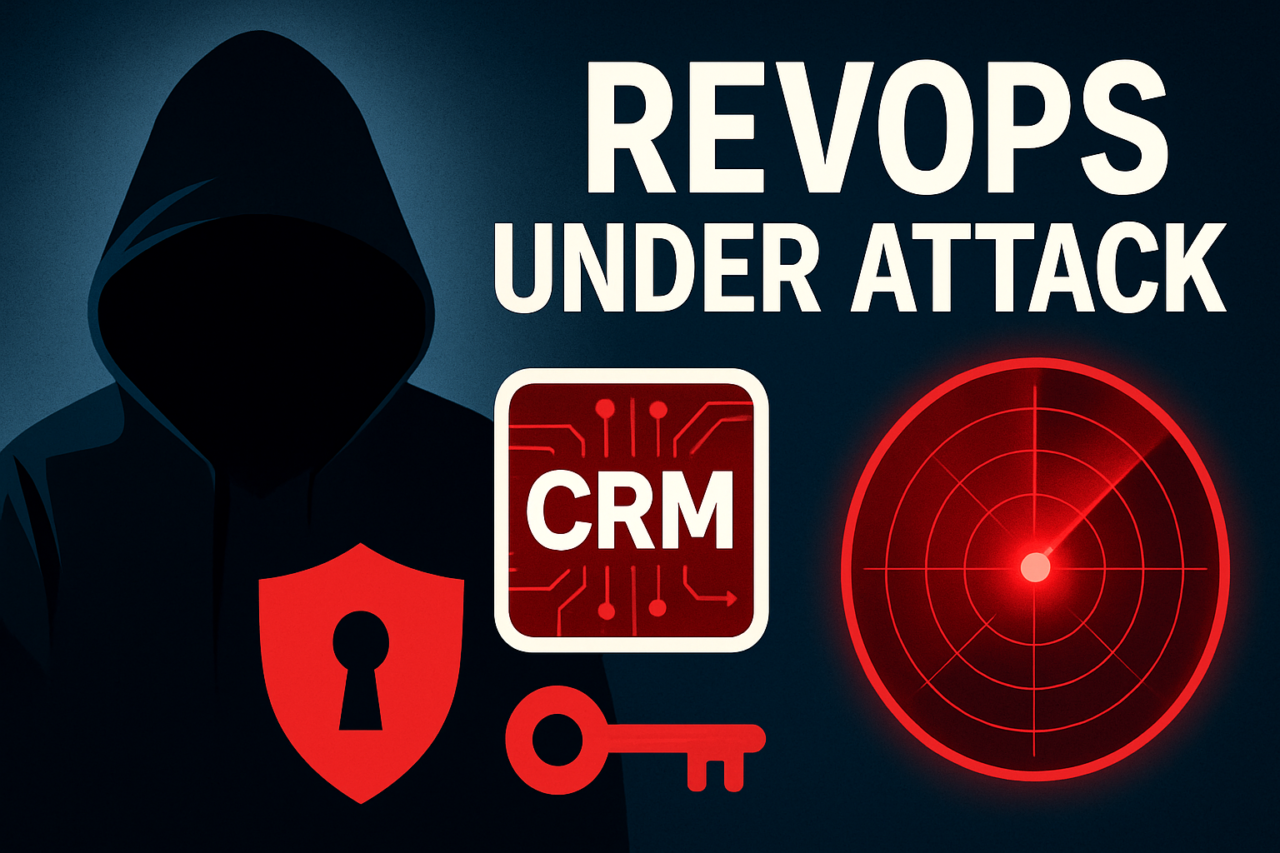
Revenue operations (RevOps) sits at the intersection of sales, marketing, finance, and technology. As AI features become embedded in CRM, marketing automation, and analytics, these systems grow more capable—and more tempting to attackers. This article outlines practical, defense-first measures to harden AI-enabled RevOps ecosystems without slowing teams down.
To start, think of AI security as a continuous process, not a one-time fix. The goal is to reduce risk across data, credentials, and software supply chains while preserving the speed and insight AI brings to RevOps workflows. We’ll cover prompt injection, data exfiltration via integrations, credential leakage, and supply-chain risk in SaaS tooling, and we’ll pair each with concrete controls you can implement today. For readers looking for deeper guidance, see linked resources on RevOps security posture, secrets management, and scoped API keys to explore related topics.
AI security in RevOps
In AI-powered RevOps, you don’t just protect a database—you shield a network of tools, data flows, and model prompts. The threat surface includes every integration point where data leaves your systems or where prompts influence automation. To compete with this risk, you need clear boundaries and observable behavior across all tools connected to RevOps workflows.
Prompt injection in RevOps tools
Prompt injection targets the inputs that influence AI responses within RevOps apps. An attacker could craft prompts or data payloads to steer pricing rules, forecast logic, or customer segmentation in ways that benefit the attacker or leak sensitive data. Even benign-looking inputs can create cascading effects if validated weakly. To defend, enforce strict input validation, strip or neutralize dangerous tokens, and employ prompt hardening where possible. Regularly review prompts used by automated workflows and sandbox risky prompts in non-production environments.
Practical reminder: keep AI prompts aligned with business policy through a combination of allowlists and data filtering. This reduces the risk of prompt injection influencing critical RevOps decisions. See how this connects with allowlists and data minimization practices.
Data exfiltration via integrations
Integrations between your RevOps stack and external SaaS tools create data pathways. If an integration leaks data, customer records, revenue forecasts, or pricing logic can flow to unauthorized destinations. Data exfiltration often hides inside legitimate API calls, making it hard to detect without proper controls. Implement strict data minimization, use scoped API keys, and segment data by role so an compromised integration cannot access everything.
Consider a pattern where a vendor app only receives the minimum fields it needs. Use scoped API keys to enforce those limits, and employ data loss prevention (DLP) checks at integration boundaries. Regularly audit which tools have access to sensitive data and ensure there is a documented data-retention policy for all integrations.
Credential leakage
Credential leakage happens when API keys, tokens, or secrets leak through code repositories, logs, or misconfigured storage. In RevOps environments, a leaked credential can grant access to customer data, pricing engines, or revenue dashboards. The remedy is a layered approach: secrets management, short-lived credentials, and strict access control policies. Do not hard-code keys; instead, store them in a centralized vault that supports automatic rotation and revocation.
Another important practice is to limit the scope of every credential. Pair secrets management with least privilege access—each service or user gets only the credentials needed for its task. Regularly rotate keys, monitor usage, and alert on unusual access patterns that could indicate compromise.
Supply-chain risk in SaaS tooling
SaaS tools used by RevOps bring dependencies—libraries, plugins, and integrations—that can introduce supply-chain risk. A compromised third-party component or misconfigured integration can become an attacker gateway to revenue data. Build a security protocol around third-party risk: require SBOMs (software bills of materials), practice vendor risk assessments, and apply code-signing where feasible. Maintain a formal vendor management process that includes regular security posture reviews and incident playbooks.
To manage this risk, maintain an inventory of tools and their data access. Align each tool to a data-subject policy that defines what data it can process and store. Use vendor risk management practices and continuous monitoring to detect anomalous activity across the SaaS ecosystem.
Practical controls to deploy now
These controls form a defense-in-depth baseline you can implement without disrupting RevOps workflows. They address prompt injection, data exfiltration, credential leakage, and supply-chain risk in SaaS tooling. Each control is paired with a concrete action you can take today.
- Scoped API keys — Restrict keys to the minimum necessary permissions and data scope. Replace broad keys with project- or app-specific tokens and rotate them on a fixed cadence. Link: scoped API keys.
- Least privilege — Assign access by role and task. Review permissions quarterly and remove unused rights. This reduces the blast radius if a token or account is compromised. Learn about policy design in least privilege.
- Secrets management — Store all credentials in a centralized vault with access controls and audit logs. Enable automatic rotation and immediate revocation when a device or user leaves the team. See secrets management for implementation guidance.
- Allowlists — Maintain approved inputs, apps, and IP ranges that can interact with RevOps data. Block everything else until explicitly allowed. Use allowlists at the API boundary and within workflow automation.
- Monitoring and anomaly detection — Collect and analyze access logs, API calls, and data-flows for unusual patterns. Set up alerts for anomalous access times, large data transfers, or new integration endpoints. Check out monitoring and analytics best practices.
These controls are interconnected: scoped API keys feed into least privilege, which feeds into secrets management, and all feed into monitoring. When you pair them with allowlists and supply-chain discipline, you close many common gaps in AI-enabled RevOps.
Implementation plan: from inventory to ongoing protection
Adopting these controls requires a practical roadmap. Start with a simple inventory of RevOps tools, data stores, and integrations. Map each item to the data types it handles, the AI features it uses, and its data-access requirements. This mapping helps identify high-risk surfaces and prioritizes remediation work.
Next, define policies that enforce least privilege and data minimization. Translate policies into concrete wiring: which teams can access which data, which credentials they use, and how those credentials are stored and rotated. Establish a cadence for reviewing access, rotating secrets, and updating allowlists as tools evolve. For guidance on policy implementation, see internal resources on policy design.
Finally, embed monitoring as a continuous practice. Collect telemetry from all RevOps apps, cloud services, and data pipelines. Use dashboards that highlight anomalous access patterns, unexpected data transfers, or new integrations. Build an incident response plan that specifies steps, owners, and runbooks for common AI-related security events.
Example scenario: a realistic RevOps breach chain
Imagine a SaaS tool used for lead scoring that processes customer data and feeds scoring results back into a CRM. An attacker gains access to an API key with broad privileges because it was not rotated after a contractor left the project. The attacker injects a malicious prompt into a workflow that influencer scoring logic, subtly biasing outcomes. The compromised tool then exfiltrates a subset of customer data through an legitimate integration endpoint.
With a strong control set, the breach would be detected early. Scoped API keys prevent broad data access; least-privilege limits the attacker’s permissions; secrets management would revoke the compromised credential automatically; and monitoring would flag unusual data transfers or access patterns. An incident playbook would guide the team to rotate keys, revoke tokens, and alert stakeholders. This scenario emphasizes how prompt injection, data exfiltration, and credential leakage can align, and how layered controls disrupt the attack chain.
Visual idea: what to show in an infographic
Consider a flowchart or diagram that maps data flows across RevOps tooling, labeling each node with the corresponding control. The graphic should show data entering tools, AI processing, and data leaving to destinations. Highlight the weakest link in each segment (e.g., an external integration, a leaked credential, or an unscoped token) and annotate the recommended controls at that point. The purpose is to give a quick, visual sense of risk hotspots and how scoped API keys, least privilege, and monitoring address them. For inclusion on your site, pair the diagram with a short caption and a link to a detailed controls checklist.
Conclusion: empower RevOps with secure AI leadership
AI can accelerate RevOps, but it also expands the threat surface if security is treated as an afterthought. By recognizing threats like prompt injection, data exfiltration via integrations, credential leakage, and supply-chain risk, you can design a resilient architecture. The practical controls—scoped API keys, least privilege, secrets management, allowlists, and monitoring—offer a concrete, measurable path to stronger security without slowing teams down.
Take the first step today: inventory your RevOps ecosystem, define data access policies, and implement a secrets vault with rotation. Then extend protections across your SaaS tooling through vendor risk practices and ongoing anomaly detection. If you’d like more hands-on guidance, explore our related resources on RevOps security and scoped API keys to tailor the controls to your environment.
In short, the right security choices today build sustainable AI-enabled RevOps—where speed and insight remain high, and risk stays in check.