TL;DR
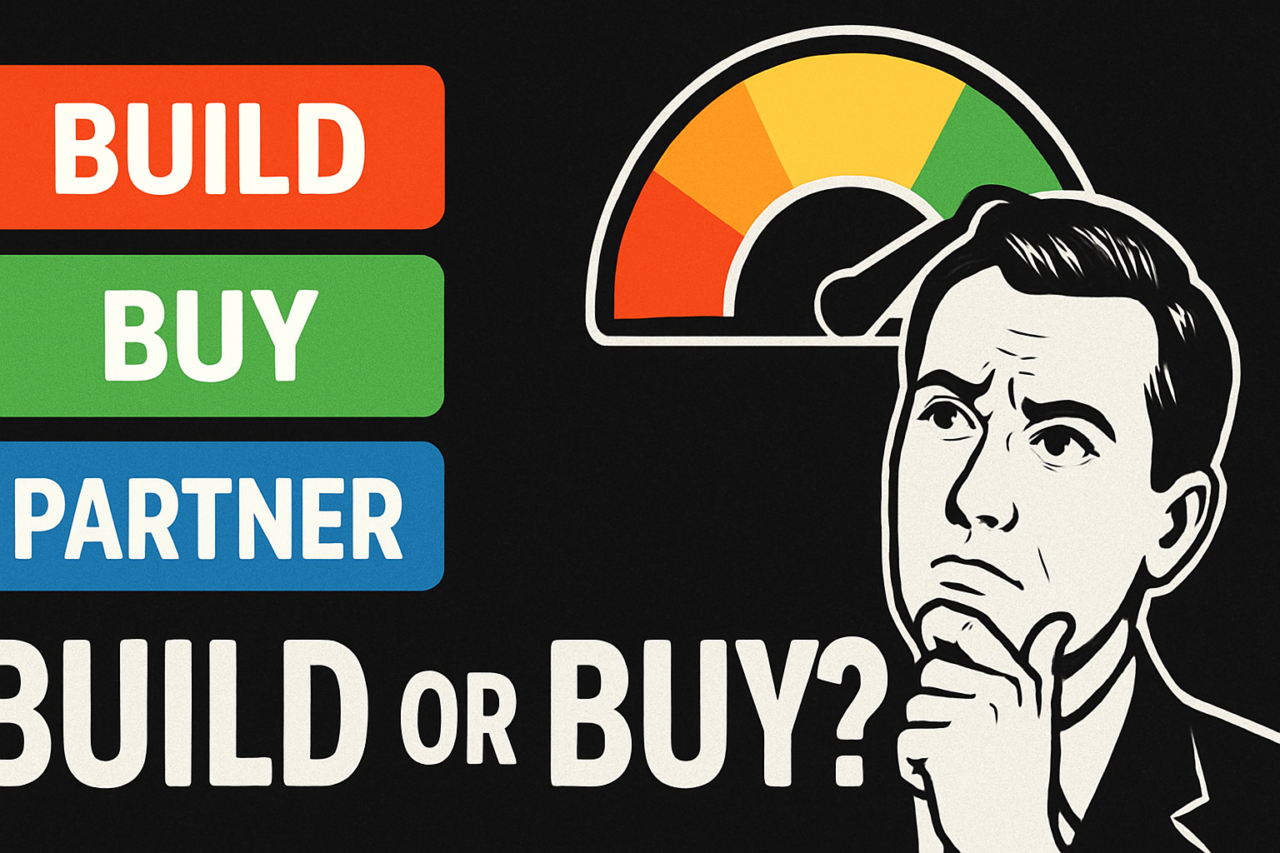
- Framework focus: Use Build vs Buy vs Partner: A Decision Framework for AI Implementation to compare options across speed, customization, data handling, talent, and total cost of ownership.
- Five criteria: speed to value, customization and control, data sensitivity and governance, internal talent and capability, and total cost of ownership.
- Scoring worksheet: A practical tool to quantify trade-offs and guide the path choice for specific AI initiatives.
- Use cases: See how lead scoring and outreach automation typically map to each option with concrete, actionable scenarios.
Building a scalable AI capability is not just about technology. It is a leadership decision that shapes velocity, risk, and the ability to execute across teams. This article presents a practical framework to compare building in-house, buying a tool, or partnering with a specialist. It translates abstract strengths and weaknesses into a simple scoring approach you can apply to real projects.
Throughout, the guidance is anchored in five criteria that matter for revenue teams and product groups: speed to value, customization and control, data sensitivity and governance, internal talent and capability, and total cost of ownership. We also provide a ready-to-use scoring worksheet and concrete examples for common revenue-related use cases such as lead scoring and outreach automation. For readers seeking deeper context, see internal resources on AI initiative readiness and hands-on guides to lead scoring automation.
Build vs Buy vs Partner: Criteria and Scoring
Choosing among building, buying, and partnering is not a single event but a decision path. The Build vs Buy vs Partner: A Decision Framework for AI Implementation helps you map each option against five criteria. For each criterion, assign scores (for example, 1–5) to Build, Buy, and Partner, then compare totals to identify a clearly preferred path for your specific objective.
Speed to value
How quickly can each option deliver meaningful results? Building often slows down as you recruit talent, design architecture, and iterate. Buying a tool can yield rapid deployment, but may require compromises on fit and integration. Partnering with a specialist typically offers the fastest path to value because a coordinated team aligns tech with business process from day one. Use a simple rule of thumb: if speed to value is critical, weigh higher scores for Buy or Partner and trace dependencies that could slow you later.
Customization and control
Customization determines how closely the AI behaves to your workflows and data model. In general, building provides the most control and the richest customization, while buying offers off-the-shelf capabilities that may require configuration. Partnering can deliver a blended outcome: tailored solutions with vendor-supported integration. If you require highly specific scoring logic, bespoke risk controls, or unique data mappings, lean toward Build or Partner with a clear customization plan.
Data sensitivity and governance
Data handling is a governance and risk anchor. If the initiative touches protected data, regulated fields, or sensitive customer information, internal controls and data lineage matter more. Building in-house gives you maximum governance and visibility over data flows. Buying a tool may introduce data-usage constraints and vendor data policies. Partners can help bridge gaps with compliance-grade architectures and formal agreements. For high-sensitivity use cases, assign higher scores to Build or Partner when governance is non-negotiable.
Internal talent and capability
Seasoned data engineers, ML engineers, and product managers are a finite asset. If your organization already has a strong AI or data science bench, building can be attractive because you leverage internal IP. If talent is thin, buying or partnering reduces risk and accelerates delivery. Use your talent audit as a direct input to the scoring: a higher internal capability score favors Build; lower capability favors Buy or Partner.
Total cost of ownership
Consider both upfront and ongoing costs. Building implies capital expenditure, cloud infrastructure, model maintenance, and potential tech debt. Buying a tool converts costs into subscription or licensing, with predictable ongoing payments but possible limits on expansion. Partnering shifts some cost to the provider but adds co-investment and governance overhead. For long horizons with frequent updates and scale needs, Run the numbers for each option and prefer the path with the most favorable total cost of ownership over 2–3 years.
Scoring Worksheet: How to Use It
Use a 1–5 scale for each criterion, where 5 represents the best fit for that option given your goals. Fill the table for Build, Buy, and Partner, then total each column. The path with the highest total is your starting point, with caveats for non-financial factors like strategic alignment and vendor risk.
| Criterion | Build (Internal) | Buy (Tool) | Partner (Specialist) | Guidance |
|---|---|---|---|---|
| Speed to value | 2–3 | 4–5 | 3–4 | Higher is better for rapid impact. Partner with a clear sprint plan can emulate speed of a tool with customization. |
| Customization and control | 5 | 2–3 | 3–4 | Build offers most control; partner provides tailored integration; buy offers configurations but less bespoke logic. |
| Data sensitivity and governance | 5 | 3 | 4 | Internal control is strongest when building. Partners can provide governance frameworks; tools vary by vendor. |
| Internal talent and capability | 5 | 3 | 4 | If you have a robust AI team, Build shines. If not, Buy or Partner reduces risk and accelerates delivery. |
| Total cost of ownership | 3 | 3–4 | 3–4 | Opex vs capex tradeoffs depend on scale and maintenance. Run a 2–3 year TCO model for clarity. |
How to apply the worksheet in practice: – Define the AI initiative you are evaluating (for example, lead scoring or outreach automation). – List the five criteria above with organizational priorities. For speed-critical projects, assign higher weights to speed to value. – Score Build, Buy, and Partner in the table. Sum the scores and compare results. – Review non-quantitative factors such as vendor risk, product roadmap alignment, and cultural fit.
Practical Examples: Lead Scoring and Outreach Automation
Lead scoring and outreach automation are common starting points for AI in revenue teams. Here are concrete ways teams apply the framework to these use cases.
Lead scoring
Lead scoring uses signals from website activity, firmographics, and engagement to assign a probability of close. If your data is fragmented, or you lack in-house data science capability, a Partner or Buy option can deliver reliable scoring quickly. If your team wants highly customized rules based on unique products or markets, building in-house can capture nuanced behavior and retain control over the ranking logic.
Internal example: A SaaS company with a strong data science bench uses Build to create a dynamic, rule-based scoring model that blends product usage data with marketing engagement. They maintain governance with defined data lineage and consent controls. Result: faster iteration on lead definitions and tighter alignment with sales stages.
Vendor example: A marketing tech firm chooses a Buy solution with an out-of-the-box scoring model but adds a lightweight integration to their CRM and a custom scoring layer to reflect specific ICPs. They deploy within weeks and monitor with a clear SLA and governance policy.
Outreach automation
Automation can scale outreach while maintaining quality. A Buy tool can offer templated engagement cadences, while a Partner can tailor those cadences to your unique buyer journeys. Building can yield a highly customized orchestrator that mirrors every touchpoint in your funnel, but it requires ongoing maintenance.
Internal example: A B2B enterprise uses Build and a homegrown automation layer to orchestrate outreach based on real-time product usage signals. They maintain strict controls over contact frequency and data sharing. Result: highly personalized sequences that respect compliance guidelines, but with ongoing development needs.
Vendor example: A mid-market company adopts a platform with native outreach templates and AI-assisted subject lines. They couple it with a CRM integration to ensure messages reflect current account context. Result: faster rollout, consistent messaging, and measurable response improvements.
Visualizing the Decision: A Simple 2×2 Framework
To aid quick decisions, consider a 2×2 matrix that maps speed to customization. Place Build, Buy, and Partner in quadrants according to your current priorities. This visual helps executives understand trade-offs at a glance and aligns teams on the chosen path. A future enhancement is to add governance overlays for data sensitivity and a separate axis for talent readiness.
Tip: Pair the matrix with a one-page risk register. List key risks for each path (security, vendor lock-in, skill gaps, integration complexity) and assign owner and mitigation actions. This practice turns a theoretical decision into a concrete plan.
Putting It All Together: A Practical Playbook
Use the framework as a living guide, not a one-time decision. Start with a pilot that uses your chosen path and a clear success metric, such as time-to-first-value or percent lift in conversion. Review results after a defined horizon (for example, 8–12 weeks) and refresh your scores accordingly. The framework should stay aligned with business goals, not just technology trends.
Internal teams can reference our AI initiative readiness checklist for a pre-flight assessment. If you want to see detailed best practices for lead scoring, check our lead scoring automation guide for step-by-step implementations. These resources help ensure your decision is grounded in organizational readiness as well as technical fit.
Conclusion: Make a Confident, Value-Driven Choice
Build vs Buy vs Partner: A Decision Framework for AI Implementation equips leaders with a structured way to compare options. By weighing speed to value, customization, data governance, talent readiness, and total cost of ownership, you can choose a path that accelerates impact while reducing risk. The framework supports nimble experimentation and scalable growth, whether you pursue internal development, a vendor solution, or a strategic partnership.
As you finalize a path, remember that the best choice often blends elements from all three options. Start with a pilot that validates the core value, then expand with additional integration or capability as your organization matures. The goal is not to pick a side forever, but to choose a proven approach that delivers consistent value to customers and the business.
Take the next step by outlining your top AI initiative, scoring each option using the worksheet, and setting a 90-day plan with concrete milestones. Your decision will shape how quickly you can unlock revenue, improve customer outcomes, and build a durable competitive advantage.
Meta guidance for optimization
Throughout this article, the intent is to balance clear, precise language with practical insight. For optimization, focus on: – Clarity: use short, direct sentences that answer a specific question. – Relevance: align every paragraph with the five criteria and the scoring workflow. – Engagement: provide real-world examples and a concrete worksheet you can reuse.
Visual references to support understanding
Consider including a simple infographic that shows the five criteria radiating from a central AI initiative, with arrows pointing to Build, Buy, and Partner. This helps readers quickly grasp trade-offs and how the scoring feeds into a decision. The infographic should be easy to reproduce in slide decks and internal memos.