TL;DR
- Build a cross-functional AI team that bridges product, data, and engineering to deliver real business value.
- Clarify roles and rituals to enable fast decision making and clear accountability.
- Align governance and metrics with business outcomes to sustain AI adoption and digital transformation.
- Follow a practical 90-day plan to move from pilot to scalable AI initiatives.
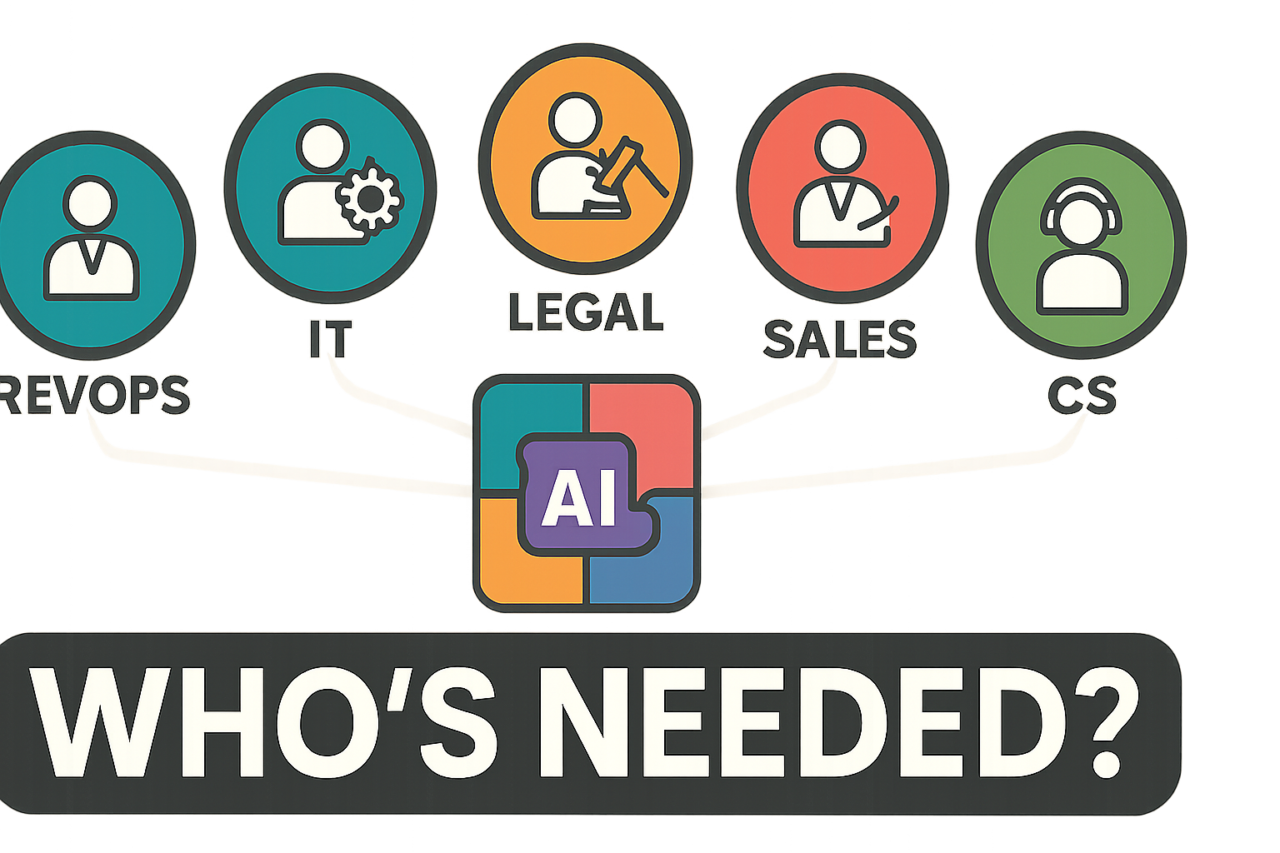
Building a Cross-Functional AI Team is a strategic approach to accelerate AI adoption and embed intelligence into everyday workflows. The idea is to blend diverse expertise into a single, aligned unit that can own end-to-end AI value—from problem framing to governance. This article outlines the essential roles, collaboration patterns, and a practical blueprint to get started.
What is Building a Cross-Functional AI Team?
Building a Cross-Functional AI Team means assembling a multidisciplinary group that combines product thinking, data science, software engineering, data engineering, and governance. The goal is to create a team that can translate business problems into AI-powered solutions while managing risk, ethics, and scalability. In practice, this structure emphasizes multidisciplinary collaboration and a product-driven mindset that keeps customer value at the center. It also supports digital transformation by aligning people, processes, and technology around measurable outcomes.
Why it matters for AI adoption and digital transformation
Organizations gain speed and clarity when they replace siloed work with cross-functional collaboration. A cross-functional AI team reduces handoffs, speeds decision cycles, and improves alignment between IT, data, and business units. When teams share a common vocabulary and governance framework, AI initiatives become easier to scale and sustain. This approach also reinforces AI governance and ethics, ensuring models are auditable, transparent, and aligned with regulatory requirements.
Key benefits include faster time-to-value, higher data literacy across the organization, and more reliable outcomes. It also helps bridge the gap between what customers need and how a model delivers it. For leaders, this means a more predictable path from pilot projects to enterprise-wide adoption and AI governance that scales with the business.
Core roles in a cross-functional AI team
The following roles form the backbone of a Building a Cross-Functional AI Team structure. They ensure product value, technical rigor, and governance work in concert.
Product Owner
The Product Owner defines the problem, confirms the expected value, and prioritizes features. They translate business goals into clear AI backlog items and maintain alignment with stakeholders. Actionable tip: establish a shared success metric at project kickoff and review it at every planning session.
AI/ML Engineer
This role designs and implements scalable AI systems. They translate models into production-ready components and collaborate on model deployment pipelines. Actionable tip: pair with an MLOps engineer to ensure robust deployment and monitoring from day one.
Data Engineer
Data Engineers build and maintain data pipelines, ensuring data quality, lineage, and availability. They enable reproducible experiments and reliable data for training. Actionable tip: implement data contracts with stakeholders to prevent schema drift during iterations.
Data Scientist / Applied Scientist
Data Scientists curate models, run experiments, and translate insights into business decisions. They focus on problem framing, feature engineering, and evaluation. Actionable tip: document model assumptions and evaluation criteria to ease governance reviews.
UX Designer / Product Designer
UX Designers ensure the AI solution fits user workflows. They prototype interactions, validate usability, and champion user-centric design. Actionable tip: run quick usability tests with real users to refine the model’s interface.
Domain Expert / Business Liaison
This role provides domain knowledge and context, ensuring the AI solution reflects real-world constraints. They help translate regulatory or policy considerations into design choices. Actionable tip: schedule weekly domain reviews to catch misaligned assumptions early.
ML Engineer / MLOps Engineer
ML Engineers implement scalable pipelines, model serving, monitoring, and lifecycle management. They ensure reliability and observability in production. Actionable tip: define SLOs for latency, accuracy, and data freshness at project start.
Governance & Ethics Lead
This role ensures adherence to ethical guidelines, bias checks, and regulatory compliance. They coordinate risk assessments and audit trails. Actionable tip: create a lightweight governance checklist that all models must pass before deployment.
Collaboration models and rituals
Effective collaboration reduces friction and accelerates progress. The following practices help align teams around shared outcomes while keeping a human-centric mindset.
- Weekly cross-functional planning to align on priorities, dependencies, and success metrics.
- Bi-weekly review demos that show business impact and user value, not just technical progress.
- Shared data and model catalogs with clear ownership and data quality standards.
- RACI or RASCI matrices to clarify roles and prevent overlaps. See an example in the visual section below.
Rituals reinforce a culture of continuous learning and accountability. They also help maintain momentum during digital transformation, when many teams juggle competing priorities.
From vision to governance: a practical blueprint
Turning a vision into a functioning cross-functional AI team requires attention to people, processes, and platforms. The blueprint below blends AI adoption with governance and MLOps practices to sustain progress.
90-day practical plan
- Days 1–30: define value and assemble the team – confirm the problem landscape, map stakeholders, and recruit core roles. Create a lightweight governance framework and a shared backlog aligned to business outcomes.
- Days 31–60: pilot delivery and first governance cycle – run a small, bounded pilot with clear success metrics. Establish data quality, model monitoring, and deployment pipelines. Begin documenting model risk and ethics considerations.
- Days 61–90: measure, iterate, and scale – review pilot outcomes against KPIs, refine features, and plan a staged scale-up. Expand the team as needed and formalize a long-term governance model aligned to the enterprise.
During these 90 days, keep the focus on business impact and digital transformation readiness. Use a simple set of metrics: value delivery (revenue, cost savings, efficiency), user adoption, data quality, and governance compliance. For teams new to AI, start with a low-risk problem and progressively tackle more complex use cases.
Practical example: a healthcare patient routing use case
Imagine a hospital wants to reduce wait times by routing patients to the right care path automatically. A cross-functional AI team would:
- Define the outcome with the Product Owner: reduce average wait time by 15% within three months.
- Engage Data Engineers to build data pipelines from EHRs, appointment logs, and staffing data.
- Have Data Scientists prototype models that predict bottlenecks and recommended queues.
- Involve the UX Designer to craft a clinician-facing dashboard that shows recommended routes.
- Use MLOps to deploy models, monitor drift, and maintain regulatory compliance.
- Incorporate a Governance Lead to verify privacy, bias checks, and risk disclosures.
Result: a scalable, auditable system that improves patient flow while maintaining trust and safety. The project demonstrates how a multidisciplinary AI team can turn data into actionable, compliant decisions.
Visual: how to structure collaboration and accountability
Suggested Visual: a Role-Responsibility Matrix (RACI) for the AI initiative. Purpose: illustrate who is Responsible, Accountable, Consulted, and Informed for major activities like data collection, model development, deployment, monitoring, and governance. This visualization helps teams avoid gaps and overlaps and supports executives reviewing accountability in a digestible format. For a ready-to-build version, consider linking to an internal template or an illustrative infographic.
Tip: pair this visual with a MLOps playbook to ensure operational readiness and ongoing governance. A well-designed matrix makes it easy to scale AI adoption across departments without losing sight of risk and ethics.
Tools, processes, and culture to sustain the effort
Successful Building a Cross-Functional AI Team requires not only the right people but also the right tools and culture. Prioritize data literacy, transparent decision making, and a platform that supports end-to-end collaboration.
- Platform and tooling: unified data catalogs, versioned datasets, and reproducible experiment tracking to enable repeatable results.
- Metrics and dashboards: business KPIs linked to model performance, user engagement, and operational impact.
- Governance practices: bias checks, privacy reviews, and model impact assessments embedded into the development lifecycle.
- Culture: encourage curiosity, experimentation, and safe experimentation with guardrails to protect users and data.
These elements help you sustain progress beyond the pilot and accelerate the transformation journey. They also support AI adoption at scale by reducing risk and increasing transparency across teams.
Conclusion: embrace the mindset of a cross-functional AI team
Building a Cross-Functional AI Team is a practical path to accelerate AI adoption and drive durable digital transformation. By combining clearly defined roles, collaborative rituals, and strong governance, organizations can turn AI ideas into reliable, value-driven solutions. Start with a focused pilot, use a simple RACI to clarify accountability, and scale once outcomes prove worth. The mindset shift—from siloed efforts to shared ownership—empowers teams to deliver impact while managing risk.
Take action today: map your current AI initiatives, identify gaps in collaboration, and initiate a cross-functional design session with key stakeholders. This small step can unlock a larger trajectory toward a resilient, innovative organization.
Visual note: consider creating a short infographic that maps roles to the stages of the AI lifecycle (ideation, data prep, modeling, deployment, monitoring). A clear visual helps teams adopt the approach faster and keeps the momentum going during digital transformation efforts.
Call to action
If you’re ready to start building a cross-functional AI team, begin with a one-page charter that defines the mission, roles, and governance. Share it with stakeholders, collect feedback, and schedule your first cross-functional planning session this week. Together, you can unlock value from AI while maintaining control, ethics, and scalability.