TL;DR
- Data Privacy in Sales AI: What You Can (and Cannot) Feed Models sets clear rules for using AI with customer data while protecting trust and compliance.
- Identify data types that require strict handling, including PII, PHI, and confidential data, and apply governance to regulated industries.
- Use safe data handling patterns such as redaction, field-level controls, role-based access, and on-prem or private endpoints.
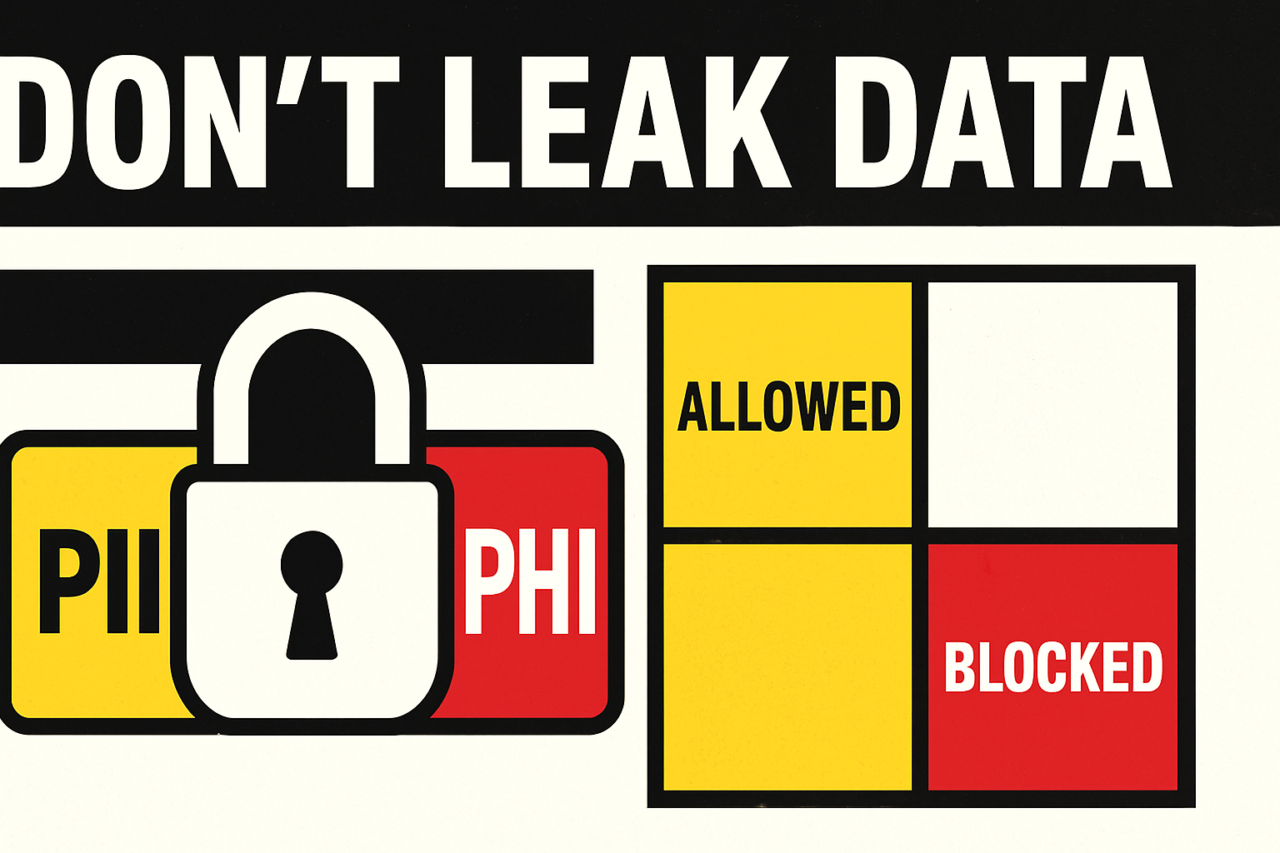
- A data allowed matrix guides revenue teams on what data can be fed to AI models, with concrete controls for each data type.
- Pair governance with practical implementation steps to move from policy to playbook in 90 days.
What Data Privacy in Sales AI: What You Can (and Cannot) Feed Models Means for Your Revenue Team
Data Privacy in Sales AI: What You Can (and Cannot) Feed Models is a practical framework for revenue teams that want the benefits of AI without compromising customer trust or regulatory requirements. As organizations expand AI adoption in CRM, forecasting, and outreach, they must guard data such as PII, PHI, and confidential customer information. This article outlines the constraints, safe handling patterns, and a concrete matrix to guide decision-making across data types and use cases.
In practice, aligning AI use with privacy constraints starts with recognizing the data your models actually process. A typical sales stack touches contact details, deal terms, and notes from conversations. When this information moves into AI systems—whether for insight, enrichment, or automation—it must be filtered, transformed, or restricted according to policy and law. The goal is not to deter innovation but to build governance that scales with your business needs.
To keep this readable and actionable, we weave in clear examples, a practical matrix, and concrete steps you can implement. The content also points to related resources on data governance basics and privacy-by-design in AI to deepen your program. The result is a playbook you can share with sales, legal, and security teams to reduce risk while maintaining AI value.
What Data Privacy in Sales AI: What You Can (and Cannot) Feed Models Means for Your Revenue Team
To apply privacy rules consistently, teams must understand four key privacy constraints and how they map to common sales data types. Below, we cover the core data categories, why they matter, and what you can feed into AI models under safe practices.
Key privacy constraints to know
- PII (Personally Identifiable Information) includes names, emails, phone numbers, and addresses. PII is highly sensitive and often subject to data protection laws. Raw PII should rarely be shared with external AI services unless tightly controlled.
- PHI (Protected Health Information) covers health data protected by HIPAA and similar laws. PHI requires strict safeguards and is typically off-limits for general sales AI unless you operate within compliant, regulated environments with specialized controls.
- Customer confidential data includes pricing strategies, contractual terms, discount structures, and strategic plans. This data is sensitive to competitive and business risks and should be protected from broad model access.
- Regulated industries such as healthcare and financial services impose additional constraints on data handling, storage, and processing. Compliance regimes (HIPAA, GLBA, GDPR, etc.) shape what you can feed to AI models and where processing occurs.
Safe data handling patterns for sales AI
- Data minimization: feed only the data elements strictly necessary for the task. Eliminate extraneous fields before model interaction.
- Redaction and masking: redact or mask identifiers and sensitive fields. Use redaction presets for contact details, pricing, and notes when possible.
- Field-level controls: define which CRM fields are allowed for AI use. Apply constraints at the field level to restrict data exposure.
- Role-based access control (RBAC): grant AI access only to users with a business need and enforce least privilege across data flows.
- On-prem or private endpoints: prefer private or on-prem endpoints for model processing when feasible. This reduces exposure to external data transfer risks and aligns with data residency requirements.
- Data retention and lifecycle: set retention windows for training and inference data. Automatically purge or anonymize data after the defined period.
- Synthetic data and anonymization: use synthetic data or anonymized datasets for model training and testing to minimize real-data exposure.
Data allowed matrix for revenue teams
The matrix below provides a concrete guide for what data can be used with AI in revenue workflows, and what controls apply. Treat this as a living document and align it with your privacy policy and legal requirements.
| Data Type | Example Elements | Allowed for AI Use? | Required Controls | Notes |
|---|---|---|---|---|
| PII (identifying details) | Names, emails, phone numbers | No (raw) | Redaction or one-way hashing; use on-prem/private endpoints | If needed, expose only aggregated signals, not individuals |
| PHI | Health data, medical history | No | Avoid feeding; if essential, use synthetic data and strict compliance controls | Typically restricted to regulated environments |
| Customer confidential data | Pricing, terms, discounts | No (raw) | Redact, anonymize, or tokenize; RBAC for access | Guard competitive and contractual information |
| Financial data | Credit limits, bank details | Generally No | Tokenize or export only non-financial indicators | Avoid exposing payment data to AI models |
| Internal identifiers | Customer IDs, account numbers | Yes (preferred) | Hash or tokenize; use on-prem/private endpoints | Use for linkage without exposing raw IDs |
| Aggregated/anonymized data | Totals by segment, de-identified metrics | Yes | Ensure re-identification risk is negligible | Excellent balance of insight and privacy |
| Synthetic data for training | Generated datasets that mimic patterns | Yes | Quality checks; maintain provenance | Useful for development without real data risk |
Practical example
Imagine a sales team using a forecasting model that analyzes past deals and activity notes. Instead of feeding literal notes containing names and pricing, the team sends a redacted summary to the model: a list of deal sizes, close dates, and product lines with all identifiers replaced by tokens. The model returns insights on win likelihood and seasonality, which the human rep reviews with the redacted data. If the model needs deeper context, the data scientist accesses a private endpoint where the raw data remains in a secure environment and only aggregated signals are exposed to the model in the cloud.
Visual guidance and data flow
Visual suggestion: a diagram showing data flowing from CRM to an AI layer via redaction and RBAC gates, with a shield icon representing on-prem/private processing. Purpose: illustrate how data moves, where redaction occurs, and how access is controlled at each step. This helps non-technical stakeholders understand safeguards and trust the process.
Governance and technical controls to enforce privacy
Effective privacy governance combines policy with concrete technical controls. The following sections outline practical controls you can implement today to support Data Privacy in Sales AI: What You Can (and Cannot) Feed Models and sustain them over time.
Redaction, field-level controls, and access governance
Begin with field-level controls that restrict sensitive fields from AI processing. Couple these with RBAC to ensure only qualified users can view or alter how data is fed to models. Implement automated redaction as a default in data ingestion pipelines, so sensitive fields are masked before any external processing. Regular audits verify that access is properly enforced and that data handling aligns with policy and law.
Data localization and private endpoints
Adopt a data localization strategy that respects residency requirements and sector-specific rules. Prefer on-premises or private endpoints for model inference when possible, and use encrypted channels for any data transfer that occurs. If cloud processing is necessary, ensure end-to-end encryption, strict data residency controls, and contractual safeguards with AI providers.
Implementation: turning policy into practice
Putting Data Privacy in Sales AI into practice requires a phased plan. Below is a pragmatic 90-day approach that aligns policy with measurable outcomes.
: inventory all data fields in your sales stack. Map how each field flows to AI systems, including any third-party processors. : finalize the matrix, establish defaults, and socialize it across sales, privacy, and security teams. : deploy automated redaction at ingestion points and enforce field-level rules in CRM integrations. : define roles (model developer, data steward, salesperson) and implement periodic access reviews. : determine what data stays on-prem vs. private cloud and secure all endpoints accordingly. : run a pilot using synthetic data to validate model outputs without touching real customer data. : monitor risk indicators, data breach tests, and model quality. Iterate controls as needed.
These steps help teams translate policy into actionable practices that protect privacy while enabling AI-driven revenue optimization. The process should be iterative, with governance updates guided by new regulations, evolving data practices, and lessons learned from pilot projects.
Conclusion: empower teams with clear rules and practical safeguards
Data Privacy in Sales AI: What You Can (and Cannot) Feed Models anchors your AI initiatives to responsible data practices. By clarifying what data is permissible, implementing redaction and field-level controls, enforcing RBAC, and choosing the right processing location, you can unlock AI value without compromising privacy. This approach not only protects customers but also strengthens trust with regulators and partners. To keep the momentum, treat the data allowed matrix as a living document and embed privacy checks into every AI project. Ready to take the next step? Review your data flows, update your policy, and align teams to a privacy-forward sales AI program.
For further guidance, explore our related resources on data governance basics and privacy-by-design in AI.