TL;DR
- Confirmations flow reduce ambiguity and nudge prospects toward attendance with timely reminders and calendar invites.
- Calendar friction reduction eliminates barriers to adding the event, improving show rate across time zones and devices.
- Value-based reminders connect the meeting to tangible outcomes for the prospect, boosting perceived relevance.
- Pre-call questionnaires collect fit and context upfront, helping reps tailor the call and filter poor-fit meetings.
- Automation for high no-show risk flags reps or segments with low show rates and triggers corrective playbooks.
In this guide on Meeting-Set to Meeting-Held: Fixing the ‘No-Show’ Funnel, you’ll learn practical patterns to lift attendance, shorten the sales cycle, and keep reps focused on high-value conversations. The goal is a reliable, repeatable process that turns booked meetings into meaningful conversations. By aligning people, processes, and technology, teams can convert more booked slots into held meetings without burning time on no-shows. For teams already using automation, these tactics help you extend your current toolset with targeted playbooks and data-driven triggers.
What is the No-Show Funnel and why it matters?
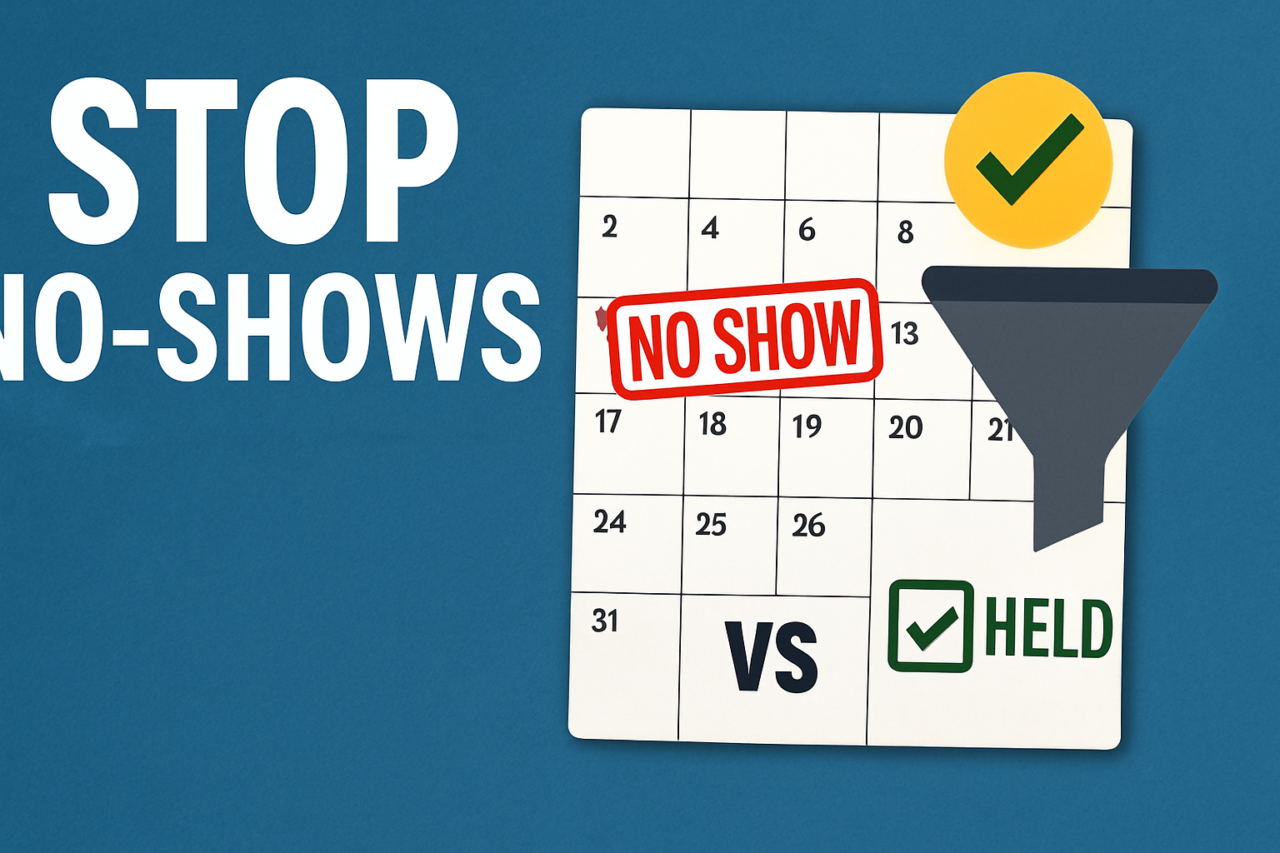
The “no-show” gap occurs when a meeting is booked but the attendee doesn’t show up. The result is a wasted sales hour, misaligned reps, and missed opportunities. The Meeting-Set to Meeting-Held: Fixing the ‘No-Show’ Funnel framework focuses on closing the gap before the meeting starts. It combines clear expectations, frictionless scheduling, and timely value messages to increase the show rate. When show rates rise, reps spend more time in discovery and qualification, not chasing empty slots. This subtle shift accelerates pipeline momentum and reduces the cost per qualified opportunity. See how prospecting basics feed into a higher attendance rate and faster closing cycles.
Meeting-Set to Meeting-Held: Tactics to Increase Show Rate
We’ll cover five practical tactics you can implement in weeks, not months. Each tactic includes a concrete action, a suggested metric, and a quick-start workflow you can adapt to your CRM and calendar tools. The goal is a cohesive flow where each step reinforces attendance and readiness for the call.
1) Confirmations flows that convert
A confirmation flow solidifies the commitment. After a meeting is booked, send a confirmation email and one SMS reminder within 24 hours, then a calendar invite with an auto-attach option. Use language that clarifies the value of the meeting and the expected outcomes. For high-value meetings, a two-step confirmation (booking confirmation, then a 1-hour reminder) improves attendance by reducing no-shows due to scheduling ambiguity. Consider a
- single-click “Add to calendar” button
- time-zone-aware scheduling
- clear agenda and expected outcomes
Example workflow: after booking, send a confirmation email with a calendar link, followed by a reminder 24 hours before the meeting. If the attendee is in a different time zone, an automatic time-zone adjustment is shown in the reminder. This flow is easy to implement with your CRM’s native automation or a lightweight workflow tool. Internal tip: link the reminder to a resource the prospect values, such as a case study or ROI calculator.
2) Calendar friction reduction
Calendar friction is a major cause of no-shows. Reduce it by providing a seamless, one-click add-to-calendar experience and by handling common blockers (time zones, invite acceptance, and calendar compatibility). Allow attendees to pick from a few time slots, if relevant, and render the final slot in their local time. Use onboarding messages that reassure the attendee of what will be discussed and the duration. A frictionless process lowers cancellations and reschedules, especially for busy executives who use multiple calendars daily.
3) Value-based reminders
Reminders should translate the meeting into tangible value for the prospect. Use reminders to reiterate the goal, the decision-maker’s pain point, and the expected outcome. Personalize reminders with a single line: what the attendee will gain from the conversation. This makes the call feel like a strategic step, not a random appointment. Track engagement signals (email opens, link clicks) and adjust reminders accordingly to keep the meeting top of mind.
4) Pre-call questionnaires to improve fit
Gather lightweight context before the call to surface relevance and build a tailored agenda. A short 3–5-question form helps you understand the prospect’s role, priorities, and current pain points. Use questions that surface decision authority, budget range, and timing. This pre-call data makes the actual conversation tighter and more productive, increasing perceived value and reducing no-shows due to misalignment.
- What is the primary goal you want to achieve with this initiative?
- Who else will participate in the decision-making process?
- What aligns with your budget and timing?
Integrate the form into the booking flow so it’s completed before the meeting is confirmed. Review responses in advance to tailor your meeting script and ensure you cover topics that matter most to the prospect.
5) Automation for high no-show risk and corrective playbooks
Automation can detect patterns that signal a high no-show risk. Build rules to flag: (a) reps with consistently low show rates, (b) segments with high cancellation volumes, and (c) meetings booked far in advance by prospects who rarely attend. When a risk threshold is reached, trigger corrective playbooks. Examples include mandatory pre-call reviews, a quick coaching nudge for the rep, or a short reschedule prompt with a revised agenda. This proactive approach keeps the pipeline moving and reduces idle time in the calendar.
How to implement with practical steps
Turn these tactics into a repeatable process. Start with a small pilot in one team or product line, measure progress, then scale. The steps below provide a practical path from concept to reality.
- Map the booking-to-attendance flow from the moment a meeting is booked to the moment it starts. Identify where drop-offs occur (booking, confirmation, reminder, reschedule).
- Configure automation rules to trigger reminders and calendar invites, based on time-to-meeting and attendee behavior. Link reminders to relevant content that reinforces value.
- Implement pre-call questionnaires as a required step before confirmation. Use the responses to tailor the agenda and identify misaligned meetings early.
- Build corrective playbooks for high-risk scenarios. Include coaching prompts for reps and a reschedule approach that preserves momentum.
- Measure and adjust track show rate, no-show rate, and meeting-to-opportunity conversion. Iterate weekly based on data from the CRM and calendar analytics.
Example scenario: A SaaS sales team notices that 22% of booked product demos are no-shows. They implement a three-part confirmation flow, add a calendar link with time-zone support, and send a 24-hour value-based reminder. After two sprints, show rate increases by 14 percentage points, while the average time-to-first-engagement drops by 1.2 days.
Metrics and signals to watch
Track these metrics to gauge progress and adjust tactics:
- Show rate by rep and by segment (target: +5–15 points over 8 weeks).
- No-show rate after reminders (target: < 10% for high-value meetings).
- Time-to-meeting from booking to held meeting (target: shorten by 1–2 days).
- Reschedule rate and reason codes (watch for recurring blockers).
- Agenda relevance score from pre-call questionnaires (higher score correlates with higher show rate).
Use dashboards to surface trends by rep, role, and industry. If a segment begins to underperform, trigger a corrective playbook immediately. This data-driven approach keeps teams accountable and helps leadership justify automation investments to stakeholders.
Visual aid to help teams understand the flow
Recommendation: create a simple flowchart that maps the booking step through to held meeting, highlighting decision points and automation actions at each stage. This visual helps teams onboard quickly and aligns marketing, sales, and operations. Suggested visual: a flowchart titled “No-Show Funnel Flow” showing stages: Booking → Confirmation → Calendar Invite → Pre-call Questionnaire → Call/No-Show, with colored annotations for automation triggers and metrics at each step. Place this in a shared wiki or slide deck for quick reference. If you use a data visualization tool, link the chart to live metrics so teams see real-time impact.
Visual purpose: clearly communicates where attendance drops, which tactics address each drop, and how automation drives timely follow-ups. If you need a ready-made template, consider an infographic variant that highlights the five tactics and a KPI heat map by stage.
Internal links and related resources
See how these techniques fit into broader sales-ops practices and lead qualification workflows. For practical templates, check our no-show correction playbooks and automation recipes. Integrate these methods with your existing CRM, calendar integrations, and communication channels to maximize impact.
Conclusion and next steps
The gap between booking and holding is a solvable problem. By applying deliberate confirmations, reducing calendar friction, delivering value-based reminders, collecting pre-call context, and using automation to trigger corrective playbooks, you can move from Meeting-Set to Meeting-Held with higher consistency. Start with a small pilot, measure the lift, and scale what works. Your revenue team will thank you for fewer wasted hours and more engaged conversations.
Next steps: implement a pilot campaign with one product line, track show rate weekly, and adjust the automation thresholds as you learn. If you want a practical starter kit, download a ready-to-edit set of templates from the resources page and adapt them to your context. The sooner you start, the faster you’ll see improved attendance and stronger pipeline momentum.