TL;DR
- Use a 10-minute framework to capture ICP fit, current initiatives, likely pains, key personas, and first-touch hooks.
- Automate pre-fill from public data, internal notes, and website signals to accelerate pipeline creation without compliance headaches.
- Make the plan a repeatable template that travels with the rep across accounts, boosting consistency and win rates.
- Include a concrete example and a visual aid to ensure quick understanding and practical application.
In most sales environments, account plans are bottlenecks. SDRs spend hours gathering data, aligning stakeholders, and drafting a strategy that may never get used in the field. The 10-minute approach reframes planning as a fast, repeatable process that informs outreach in real time. It helps reps verify ICP fit, map current initiatives, anticipate pains, and craft first-touch hooks that resonate. This article explains how to build and use a compact plan that travels with you—from research to outreach to early engagement.
The goal is simple: you want a living, actionable snapshot that can be created in 10 minutes and updated in 2 minutes as you learn more. The plan should be explicit about who matters, what matters, and how you will start the conversation. When done well, it reduces time spent on theory and increases time spent converting interest into pipeline. For teams, it creates a shared language so every rep starts from a common baseline, improving forecasting and collaboration.
What a fast, repeatable plan looks like (and what it should capture)
To keep the process efficient, the plan should cover five core areas in a concise format. It is a compact account plan template that works across ICPs and verticals. The five sections are designed to be explicit, not ornamental.
ICP fit snapshot
Summarize who the ideal customer is for this account. Include firmographics, buying role, and a quick verdict on ICP alignment. A sentence or two should answer: Is this account worth pursuing now? If yes, note the top reason and the one metric you’ll use to measure fit (for example, ARR, number of employees, or tech stack). Link to the internal ICP guide when you need deeper criteria: ICP fit guide.
Current initiatives
Identify two to three strategic initiatives the account is pursuing. These can be stated from public signals (press releases, annual reports, product pages) or internal notes. The aim is to show you’ve done your homework and to spot a natural hook. For example: increased cloud adoption, a push toward cost optimization, or a platform consolidation project. If you’re unsure, note a plausible initiative and mark it as a hypothesis to test with your first outreach.
Likely pains
Describe pains or gaps that align with the account’s initiatives. Use concrete language tied to business outcomes (revenue, cost, risk, speed). A well-crafted pain statement reads like a benefit request rather than a feature pitch. If possible, attach a qualifying metric you can request in the first call (for example, reduce project cycle time by 20% or lower support costs by 15%). This keeps your outreach focused on outcomes.
Key personas
List the personas who drive decision, influence, or user adoption. For each persona, include role, influence level, probable concern, and a note on preferred channels. A typical starter set includes: Economic Buyer (the budget owner), Champion (internal advocate), and User/Influencer (day-to-day impact). Keep it tight and actionable; a single line per persona is enough to start targeting.
First-touch hooks
Draft a short set of hooks aligned to the pains and initiatives. Focus on one relatable outcome per hook and a low-friction call to action. For example: “I saw your team is prioritizing cloud-first modernization—our clients cut cloud spend by 18% while accelerating deployments. Could we discuss a 15-minute fit call this week?” Include at least two hooks: one for email, one for LinkedIn message, and one for voicemail/script if appropriate. You can reuse and customize hooks from your team’s repository here: first-touch hooks.
How to build it in 10 minutes: a practical playbook
Turn the five sections above into a compact one-page plan you can open before every outreach. Use this step-by-step to stay consistent and fast.
Step 1 — Quick ICP verification (2 minutes)
Check basic fit using public data: company size, industry, tech stack, and geography. If the ICP is not a fit, note the red flags and move on. If it’s a fit, capture the top indicator that proves value for this account, such as a similar customer example or a known challenge.
Step 2 — Scan the initiatives (2 minutes)
Review the latest annual report, press releases, and product updates. Record 1–2 initiatives that align with your solution. If you can’t identify any, pose a hypothesis that can be tested in outreach.
Step 3 — Identify pains (2 minutes)
Frame pains in business terms. Tie each pain to an initiative and quantify where possible. A single, concrete pain statement is often enough to shape your hook.
Step 4 — Map personas (1 minute)
Put a name to the primary buyer and the key influencer. Note their likely concern and preferred outreach channel. A brief note per persona keeps your message targeted.
Step 5 — Draft initial hooks (3 minutes)
Write 2–3 hooks that connect pains to outcomes. End with a clear, low-friction CTA. Save these in your prospecting toolkit so you can reuse and tailor quickly. For a quick-start reference, see the hook library.
Automation ideas to pre-fill the plan (without compliance headaches)
Automation should accelerate your workflow, not create risk. Here are practical ways to pre-fill the plan using publicly available data, internal notes, and website signals.
Public data sources
Automate data collection from company sites, press releases, job postings, and industry reports. Tools can pull funnel signals like new product launches or price changes. These signals inform current initiatives and potential pains without requiring private data. Integrate results into your plan as a dynamic snapshot you can refresh before outreach.
Internal notes and CRM
Leverage prior interactions, notes from SDRs, and account history stored in your CRM. Pre-fill the ICP fit verdict, the last known initiative, and any internal relationship context. Create a lightweight sync rule so the plan updates when you log new notes or close a deal stage change.
Website signals
Track behaviors such as product page visits, pricing page views, and resource downloads. Map these signals to pains and initiatives to tailor your hooks. Ensure data handling respects privacy policies and internal compliance guidelines.
Compliance guardrails
Keep automation within approved boundaries. Use public data only for the initial plan. Do not import personal data beyond what is publicly available. Set frequency limits for automated updates and log every automated action for auditability. If in doubt, consult your compliance team or legal policy docs.
Example: a concrete starter for a mid-market SaaS account
Account: AcmeOps, a mid-sized SaaS company focused on workflow automation for operations teams. ICP fit: mid-market, 100–500 employees, annual revenue in the $10–50 million range, tech stack includes cloud platform X and analytics tool Y. Initiative: accelerate time-to-value for customers and optimize cloud spend. Likely pains: long procurement cycles, complex integrations, and limited internal resources for implementation. Key personas: CIO (economic buyer), VP of IT (influencer), and Director of Customer Success (user/runner). First-touch hook: email that ties to procurement speed and cost containment. Example outreach: “I noticed AcmeOps is expanding cloud usage this quarter. We helped similar teams reduce deployment time by 40% and cut implementation costs. If you’re open, I’d love a 15-minute chat to see if this could fit your roadmap.” For more context on adapting to similar ICPs, see our ICP playbook: ICP fit guide and check the hook library: first-touch hooks.
Visualization and how to use it
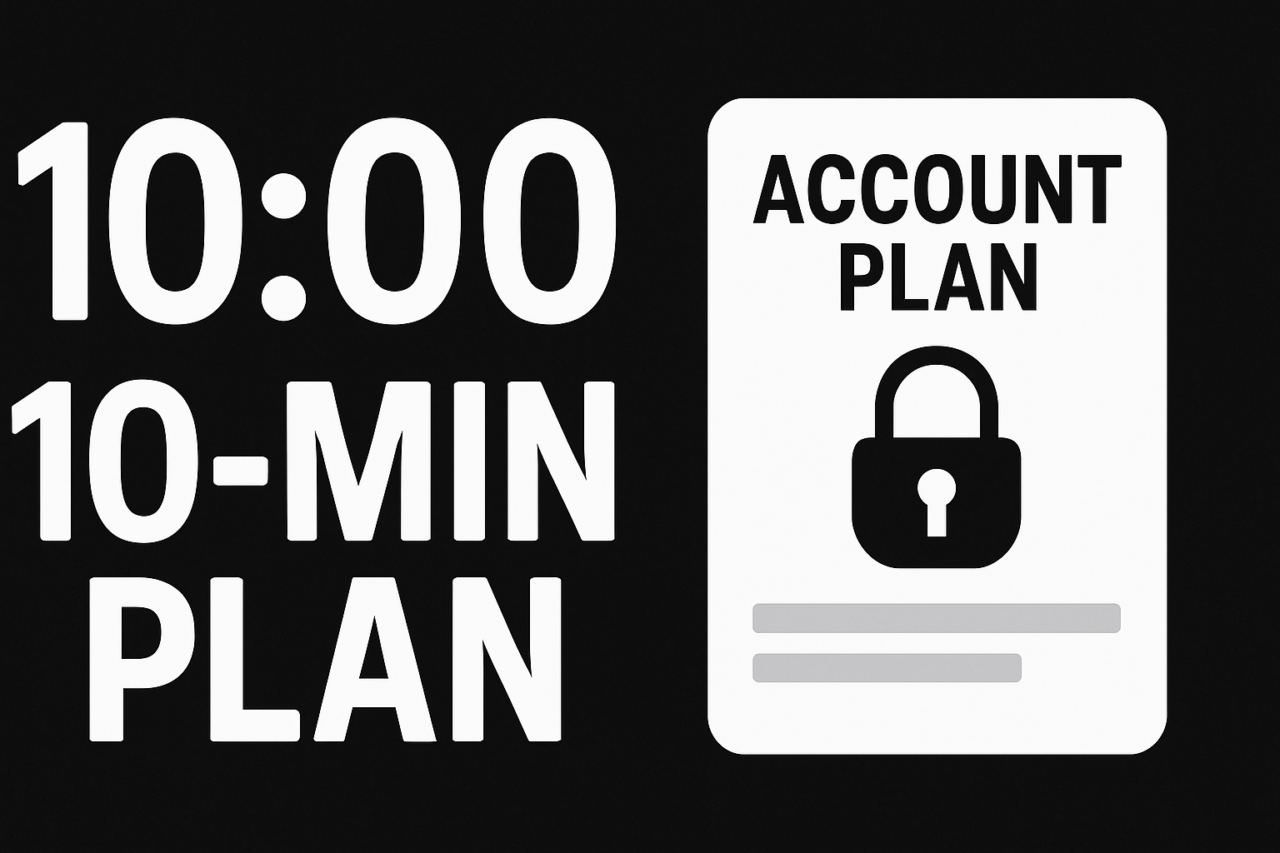
Include a simple visual, such as an Account Plan Canvas, to summarize the five sections at a glance. A one-page infographic can show ICP fit, initiatives, pains, personas, and hooks. The visual helps your teammates quickly understand the account and serves as a ready-to-share brief before outreach. Suggested asset: Account Plan Canvas image (link to internal asset or external generator). Purpose: quick-alignment, onboarding for new reps, and a reference during discovery calls.
Why this works for SDRs and how to scale it
The value of a 10-minute plan lies in consistency and speed. When reps start every call with a compact, data-backed snapshot, they speak the same language as their prospects. This reduces back-and-forth and increases the likelihood of a meaningful conversation. As you scale, codify the template into a living document that your team can clone for new accounts, with fields pre-populated by automation and standard notes from your CRM. Consider adding a quick review checklist to your post-call notes and a 2-minute update drill for each account to keep information fresh.
Where to place the plan in your workflow
Integrate the 10-minute plan into your standard playing field. Use it during the research phase before you reach out. Refer back to it during your discovery calls to stay aligned with the ICP, initiatives, and pains. When you reflect on win/loss analyzes, reuse and refine the plan so it improves over time. This approach makes the plan a living artifact that grows with your pipeline and your understanding of the customer.
Practical example and a quick drill
To practice, pick one target account you have not engaged yet. In 10 minutes, fill out the five sections: ICP fit snapshot, current initiatives, likely pains, key personas, and first-touch hooks. Draft two outreach messages using those sections. Send one message via email and one via LinkedIn. After your outreach, note the response and adjust the plan accordingly. This exercise makes the concept tangible and ready for real-world use.
Visual reference and suggested formats
For teams that benefit from visuals, provide a ready-to-use canvas. A compact diagram can show the relationship between ICP fit, initiatives, and pains, with branches for each persona and hooks. This format supports quick coaching sessions and peer reviews. If you publish the canvas as an internal resource, include a brief caption explaining how to interpret each section and how to update it as new information arrives.
Conclusion: start your 10-minute plan today
The 10-minute, repeatable account planning approach helps SDRs convert more prospects into pipeline by aligning research, messaging, and outreach in minutes rather than hours. It reduces friction, accelerates learning, and creates a shared language across teams. Begin by using the five sections as a template, automate data where appropriate, and refine your hooks with every new account. If you want a starting point, reuse the example provided and customize it to your ICP and product.
Ready to put this into practice? Start with the account plan template and tailor it to your ICP. For ongoing guidance, read more about prospecting best practices and keep refining your first-touch hooks in the linked library. As you adopt the 10-minute approach, your team should see faster plan creation, clearer enablement, and a noticeable uplift in early-stage pipeline.
Visual note: A one-page Account Plan Canvas works best when it is modular. You can swap in new initiatives, pains, or personas as markets shift, keeping the plan relevant without restarting from scratch. The goal is a practical tool you can pull out of your pocket before every outreach.