TL;DR
- Do not rely on demos alone. Evaluate data handling, retention, and model training policies up front.
- Assess security and incident response. Look for formal controls, audits, and breach notification timelines.
- Clarify portability and exit options. Ensure data export formats and termination support are defined.
- Create a scoring rubric. Use a simple 0–5 scale to align RevOps, Legal, and Procurement fast.
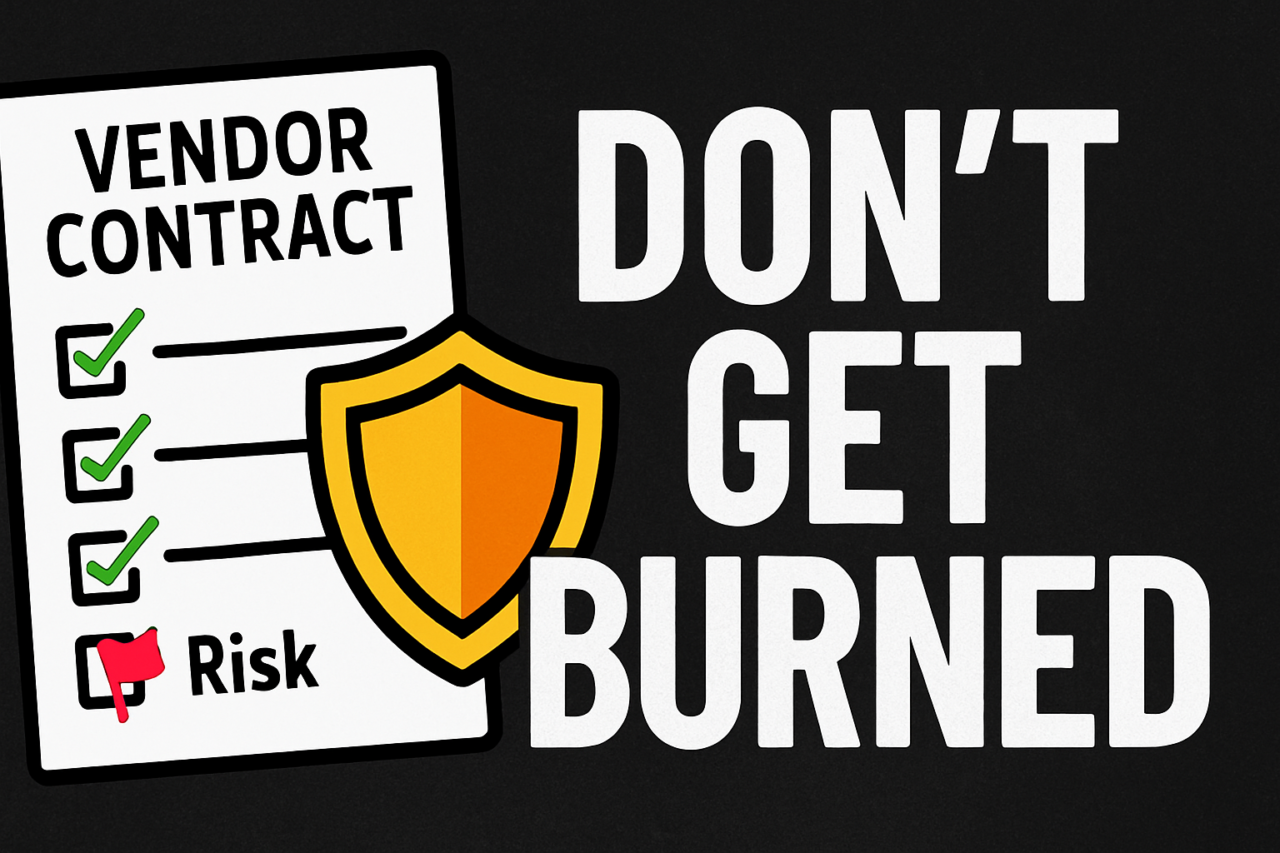
- Apply a repeatable process. Use this checklist across vendors to speed up alignment and reduce risk.
Before adopting an AI tool in the revenue stack, feature demos do not reveal risk. This guide outlines a practical Vendor Due Diligence Checklist for AI Tools in the Revenue Stack. It focuses on data handling, security posture, retention, model training policy, incident response, SLAs, and portability. Use it to frame questions, score vendor responses, and align procurement with RevOps.
Below you will find a structured approach that helps cross-functional teams move from interest to decision with confidence. The goal is to reduce friction while increasing transparency about how vendors manage sensitive revenue data, model behavior, and continuity in production.
What is the Vendor Due Diligence Checklist for AI Tools in the Revenue Stack?
The Vendor Due Diligence Checklist for AI Tools in the Revenue Stack is a practical framework that turns vendor conversations into measurable risk signals. It translates product pitches into actionable questions tied to governance, risk, and compliance. By documenting vendor responses, you can compare options quickly and align on what matters most for revenue reliability and customer trust.
In practice, this checklist supports data governance, vendor risk management, and exit planning as a cohesive process. It complements broader security reviews and contract negotiations. For teams new to formal vendor risk, this checklist offers a clear path from pilot to production.
Data Handling and Privacy
Data handling is the backbone of trust when AI touches revenue processes. Start by mapping data flows: what data enters the tool, how it is processed, where it is stored, and who can access it. Clarify whether customer data is used to train models, and if so, under what safeguards and controls.
Key questions to ask
- Where is data stored and processed (data residency), and who has access to it?
- Is customer data used to train or improve models, and is an opt-out option available?
- What data minimization practices are in place to limit exposure?
- Are data encryption and key management implemented at rest and in transit?
- What measures exist to detect and prevent accidental data leakage across tenants?
Semantically important terms to monitor include data retention, data minimization, and data sovereignty. Use the vendor’s data retention policy to assess alignment with your governance standards. A clear policy reduces risk of over-collection and unintentional data exposure.
Security Posture and Incident Response
A strong security posture reduces the likelihood of breaches and accelerates containment. Review frameworks the vendor complies with, third-party audits, and the maturity of their incident response process. Look for documented breach notification timelines and tested playbooks.
What to verify
- Security certifications (SOC 2 Type II, ISO 27001, etc.) and scope of audits.
- Third-party penetration testing results and remediation timelines.
- Access controls, identity management, and anomaly detection capabilities.
- Breach notification timelines and the escalation path for incidents affecting data integrity or availability.
- Dedicated security contact and a defined right-to-audit process.
Documentation matters. Require a copy of the latest SOC 2/audit report and a summary of any material findings. Tie security expectations to your organization’s risk tolerance and regulatory requirements. For revenue teams, a minimal but robust security posture reduces the chance of revenue disruption caused by vendor incidents.
Data Retention and Model Training Policy
Data retention policies determine how long data lives inside the tool and whether it leaves your control for training or analytics. Model training policies affect future behavior of the AI tool and the possibility of data leakage via model outputs.
What to ask
- Do you retain customer data, and for how long?
- Is data used to train or fine-tune models, and can customers opt out?
- Can customers request deletion of data after a contract ends or upon request?
- Are there data anonymization and aggregation options for analysis without exposing PII?
- How does the vendor handle logs and telemetry data, and what is retained by default?
Having a clear policy is essential for privacy governance and data lifecycle management. It also supports internal audits and regulatory reporting. If a vendor trains models on your data, ensure you have consent, compensation or counterparty protections, and a defined retraining policy that respects your business rules.
Incident Response, SLA, and Operational Readiness
Service levels and incident response governance are critical for revenue-critical tools. Define what uptime you require, how incidents are classified, and how quickly the vendor commits to remediation. Align these with your internal SLAs and business continuity plans.
Questions to guide SLA negotiations
- What is the guaranteed uptime and maintenance window?
- What are response times by severity level, and how are incidents escalated?
- What is the maximum allowable data loss (RPO) and recovery time objective (RTO)?
- Are there disaster recovery configurations and failover procedures in place?
- What is included in support coverage (24/7, business hours, on-call)?
In practice, write SLAs that mirror your revenue processes. Tie them to penalties or credits if commitments are not met. Document incident response playbooks and ensure your security incident response team can coordinate with vendor teams when needed.
Portability, Interoperability, and Exit Strategy
Portability protects you from vendor lock-in. Ensure data export formats are open or widely supported, APIs are stable, and there is a clear exit plan at contract end. Interoperability with your existing RevOps stack is also a priority, especially for data and workflow automation.
Key considerations
- Data export formats and completeness of data exports at termination
- API compatibility, rate limits, and versioning controls
- Support for data de-identification and portability to your own environments
- Contractual exit assistance, including data migration support and knowledge transfer
- Count of third-party dependencies that would affect portability post-termination
Ask vendors for a sample data export and a runbook for migration. A well-defined exit path reduces disruption and protects revenue continuity during transitions. Include portability in your long-term vendor scorecard as a non-negotiable criterion for mission-critical tools.
Vendor Scoring and How to Ask
A simple scoring rubric speeds alignment among RevOps, Legal, and Procurement. Use a 0–5 scale for each criterion and aggregate scores to compare vendors objectively. The rubric should reflect your risk appetite and regulatory obligations.
Practical scoring approach
- 0 = No information or unacceptable risk
- 1 = Minimal compliance or incomplete evidence
- 2 = Basic controls, some gaps
- 3 = Satisfactory controls with documented evidence
- 4 = Strong controls and proactive governance
- 5 = Exemplary governance, transparent reporting, and flexible terms
Use a vendor response scoring sheet that covers these domains: data handling, security posture, retention and training, incident response and SLAs, and portability. For each question, assign a score and a brief justification. Summarize high-risk gaps with a remediation plan and an agreed timeline. This process creates a defensible, auditable path from discovery to procurement.
Sample questions you can reuse or adapt include:
- What data is collected, stored, processed, and where?
- Do you offer an opt-out of model training on customer data?
- Can we obtain an independent security assessment report and a breach notification timeline?
- What data export formats are available at contract end?
- How do you handle data encryption keys, and who manages them?
Document how procurement and RevOps will use the score to decide go/No-Go, and how exceptions will be managed. This alignment reduces long cycles and ensures every stakeholder understands risk and value. For added rigor, cross-link the scoring with vendor risk management frameworks used by your organization.
Practical Example: A RevOps Evaluation Scenario
Imagine your team is evaluating two AI tools to automate lead scoring. Tool A offers strong data separation, opt-out for training, documented incident response, and a clear data export path. Tool B has solid security controls but lacks explicit data export options and a detailed exit plan. Use the scoring rubric to compare them side by side.
- Data handling: A = 4, B = 3
- Security posture: A = 5, B = 4
- Data retention and training: A = 4, B = 2
- Incidents and SLAs: A = 4, B = 3
- Portability: A = 4, B = 2
Tool A emerges as the better choice on governance grounds, even if Tool B has a few perks. The scorecard makes the trade-offs explicit and helps leadership approve the decision faster. If you want, we have a ready-made scorecard template you can adapt.
Visualizing the Process
A practical visual is a vendor due diligence matrix. It maps each criterion to a score and highlights gaps that require remediation. You can layer this with a heat map showing risk severity by category and a timeline showing remediation milestones. A one-page matrix makes conversations with executives straightforward and keeps the focus on governance, not just features.
Suggested visual: a matrix with columns for Data Handling, Security, Retention/Training, Incident Response, SLA, and Portability. Rows show questions, vendor responses, and the assigned score. A color legend helps readers spot high-risk areas at a glance.
How to Operationalize This Checklist
Turn the checklist into a reproducible process that spans procurement, legal, security, and RevOps. Begin with a formal RFP or questionnaire that requires responses in written form and, where possible, supporting documents. Schedule a vendor assessment workshop to walk through critical items and confirm interpretations.
Practical steps include:
- Assign owners for each domain (data, security, retention, etc.), with clear responsibilities and deadlines.
- Request sample contracts that embed data rights, exit clauses, and audit rights.
- mandating dates for responses and a shared repository for evidence (policies, certifications, test results).
- Include RevOps scenarios to validate how the tool behaves with live data and revenue processes.
- Establish a cadence for revisiting the vendor relationship as the product evolves and new risks emerge.
To keep momentum, link this process to your internal knowledge base and align with the internal policy on data usage for third-party tools. Consider creating a quarterly refresh to account for policy updates, regulatory changes, and product updates from vendors.
Internal alignment matters. For example, link to an article on data privacy for revenue tools to keep teams synchronized on expectations. This is how governance becomes a practical advantage, not a compliance burden.
Conclusion: Turn Due Diligence into Competitive Advantage
The Vendor Due Diligence Checklist for AI Tools in the Revenue Stack is more than a risk exercise. It is a decision framework that aligns RevOps with Legal, Procurement, and Security from day one. By clarifying data handling, security posture, retention, training policies, incident response, SLAs, and portability, you reduce risk and speed time to value. You also create a foundation for responsible AI use that protects customers and supports growth.
Ready to put this into practice? Start with a pilot vendor evaluation using the scoring rubric, then escalate any gaps with a remediation plan and target dates. If you want a ready-to-use template, explore our resource library and adapt it to your organization’s needs. The goal is clear: select AI tools that are safe, controllable, and interoperable with your revenue stack while keeping teams aligned and customers protected.
Meta considerations and reader takeaway
By applying this structured Vendor Due Diligence Checklist for AI Tools in the Revenue Stack, you create a repeatable, auditable process that scales with your business. It supports risk-aware innovation, keeps data governance front and center, and reduces the time to procurement decisions. As AI tools proliferate, a disciplined approach to vendor evaluation becomes a competitive differentiator.