TL;DR
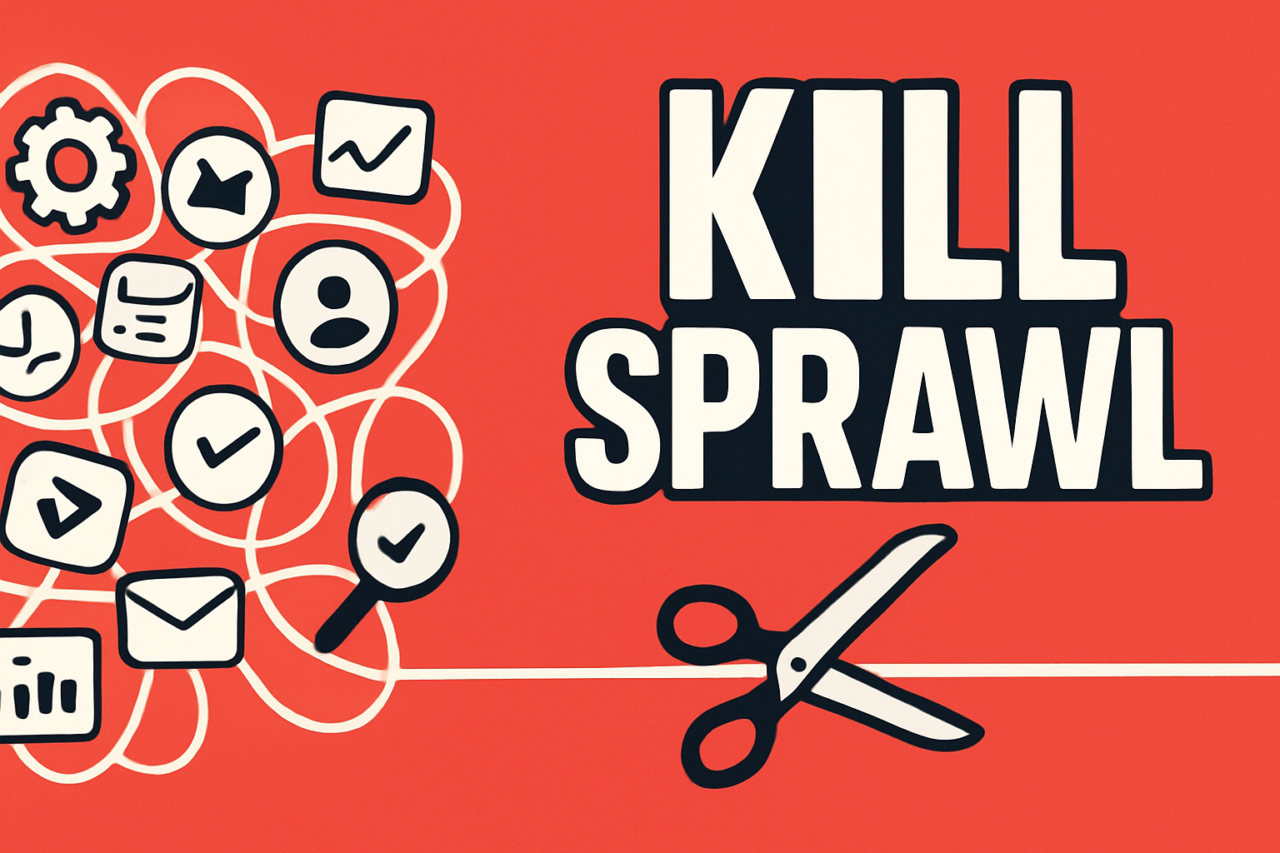
- Tool sprawl erodes adoption by forcing teams to switch contexts and juggle data in multiple systems.
- Audit your stack to identify duplicates, gaps, and unnecessary overlaps that slow work.
- Consolidate around a primary workflow per role to unlock consistency and faster onboarding.
- Use a structured decision framework (value, usage, integration cost, governance) to guide decommissioning.
- Communicate transparently with a phased plan to reduce anxiety and sustain momentum during consolidation.
Tool sprawl is a common byproduct of growth. In this article, Why ‘Tool Sprawl’ Kills Adoption—and How to Consolidate, you’ll find a practical path to reduce noise, align data, and solidify adoption across the organization.
Why ‘Tool Sprawl’ Kills Adoption—and How to Consolidate
When teams add tools without a clear plan, people must learn new interfaces, manage data in parallel, and translate information between systems. This friction lowers adoption rates, creates data silos, and prolongs time-to-value for initiatives. The core issue isn’t the number of tools alone; it’s the lack of a cohesive workflow strategy that ties each role to a single, consistent path from start to finish.
To reverse this trend, you need a principled approach that starts with visibility and ends with governance. The following sections outline concrete steps to audit your stack, define role-based workflows, evaluate tools with a structured framework, and implement a communication plan that reduces anxiety during consolidation. For a practical starting point, review the linked resources on audit your stack and tool consolidation.
Audit your stack: map, measure, and identify overlap
The first step is to illuminate what you actually own and how it’s used. A thorough audit creates the baseline you need to make informed decisions about consolidation.
- Inventory every tool used in core workflows, by team and by data domain (CRM, collaboration, analytics, etc.).
- Document use cases for each tool, focusing on the tasks it enables and the data it houses.
- Identify duplicates and overlaps where two or more tools cover the same function (e.g., two project managers using different task trackers).
- Assess data interoperability—which tools can sync, which require manual exports, and where data quality suffers from fragmentation.
- Measure utilization with simple metrics: active users, last activity date, and time-to-complete for common tasks. This helps separate tools that are essential from those that are optional or underutilized.
Use a centralized catalog that tracks ownership, data lineage, and integration points. This catalog becomes the living truth for your consolidation effort. Consider linking to an internal playbook or knowledge base so teams can see how data flows between systems and why a consolidation is underway.
Define a role-based primary workflow: consolidate around a single path per role
A successful consolidation centers on role-based primary workflows. Each role should have one or two canonical paths that cover the majority of day-to-day work. Anything outside that path should be evaluated against the new standard before adoption.
Example roles to consider:
Sales
Map the essential steps from lead capture to opportunity closure. Choose one CRM interface, one email sequence tool, and one proposal/document repository. Ensure data flows between these systems with minimal manual re-entry.
Marketing
Define the core lifecycle from campaign concept to attribution. Align analytics, campaign orchestration, and asset management under a single platform or tightly integrated set of tools.
Customer Success
Consolidate ticketing, knowledge base, and customer communications into a unified customer view. A single source of truth reduces back-and-forth and accelerates issue resolution.
Engineering and Product
Agree on a primary set of collaboration, code management, and issue-tracking tools. Ensure traceability from requirements to deployment, with consistent data models across the stack.
By defining a primary workflow per role, you create a predictable user experience. This reduces cognitive load and accelerates onboarding because new hires learn a single path instead of multiple, conflicting ones.
The decision framework: value, usage, integration cost, governance
Choosing what to keep and what to retire requires a transparent framework. Use four criteria to evaluate each tool:
- Value — Does the tool directly improve outcomes for the target workflow? What is the measurable impact on speed, accuracy, or customer satisfaction?
- Usage — Are there a critical mass of active users? Do most users rely on it for the core tasks of their role?
- Integration cost — What is the burden to connect the tool to the primary workflow? Consider data migration, API limits, and ongoing maintenance.
- Governance — Who owns the tool, who manages data quality, and what policies govern access, retention, and decommissioning?
To operationalize this framework, score each tool on a simple 1–5 scale for each criterion. Tools with high value, strong usage, reasonable integration costs, and clear governance are strong candidates to retain. Tools with low scores become candidates for consolidation or retirement. This scoring helps you maintain objectivity and repeatability across teams.
For a practical reference, see how governance and scoring interact in our internal playbooks on governance models and tool scorecards.
Consolidation plan: decommission, migrate, govern
Consolidation requires a phased, low-risk approach. A well-structured plan reduces disruption and preserves trust with your teams.
- Choose primary tools per workflow. Confirm leadership alignment and document the reasoning in a public plan.
- Plan data migration from legacy tools to the primary stack. Prioritize data critical to ongoing work and minimize data loss.
- Decommission gradually—start with non-critical components, then move to core systems once the new workflow proves stable.
- Establish data governance with clear ownership, roles, and SLAs for data quality and retention.
- Provide migration support—templates, scripts, and dedicated help desks to ease the transition.
Keep a running risk register. Track dependencies, potential outages, and rollback options. Regularly revisit the plan with stakeholders to address new discoveries or changes in priorities.
Change management: a communication plan that reduces anxiety during consolidation
People fear loss of control and knowledge when tools change. A thoughtful communication plan helps maintain morale and momentum.
- Be transparent about the why, scope, and timeline. Share the early wins and the anticipated impact on daily work.
- Provide a phased timeline with clear milestones. Set expectations for training, data migration, and support windows.
- Offer hands-on training—short, role-specific sessions focus on the primary workflow. Use real tasks to demonstrate value.
- Establish an ambassador network—early-adopter volunteers who can answer questions and model best practices.
- Keep feedback loops open—create easy channels for questions, concerns, and quick wins to be shared publicly.
Communication should emphasize continuity and improvement. When teams see that the consolidation reduces busywork rather than adds steps, adoption rises naturally. For a practical template, check our internal change-management playbook.
Practical example: a narrative of consolidation in action
Consider a mid-sized software company, Acme Nova. Over three years, it added five collaboration and analytics tools to support product launches. Each department operated in a different system, and handoffs required syncing data across silos. The result: frustrated users, inconsistent reports, and delayed decisions.
The leadership initiated an audit to map the current state, then defined a role-based primary workflow for sales, marketing, and customer support. They adopted a single CRM with integrated email and a unified analytics platform. Data migration was staged for non-critical records first, then core data moved over with validation checks. A governance committee defined data ownership, retention schedules, and access controls.
Within 90 days, onboarding time decreased, dashboards became consistent, and customer feedback on the changes was positive. The company documented the process and shared quick wins across teams to reinforce the new way of working. The result was a leaner stack, clearer data, and faster decision-making.
Visual guidance: what to visualize to support consolidation
As you implement the plan, a few visuals help keep teams aligned:
- Consolidation matrix showing role-based workflows on one axis and primary tools on the other, highlighting gaps and overlaps.
- Data flow diagram illustrating how data moves between the chosen primary tools and where data is consolidated.
- Usage heatmap by user group to identify critical tools and underutilized ones.
- Migration timeline with milestones, owners, and risk levels.
Visuals should be simple and actionable. For teams seeking a ready-made template, our internal visual toolkit offers editable charts and example diagrams.
What consolidation means for the future of adoption
Consolidation is not a one-off project. It’s a deliberate strategy to improve data quality, speed up onboarding, and strengthen governance. When teams move to a well-defined primary workflow, they experience fewer context switches and clearer ownership. That clarity drives higher adoption, faster value realization, and more predictable outcomes.
Remember that the goal is not to eliminate tools for the sake of it. The goal is to remove friction and align technology with how people actually work. When the plan is clear, communication is honest, and governance is practical, you create a more resilient organization with a lean, scalable tech stack.
Conclusion: actionable steps to begin today
Start with a simple audit, then identify one or two role-based primary workflows to pilot consolidation. Apply the decision framework to each tool, and build a phased migration plan with governance baked in from day one. Finally, launch a transparent communication plan that explains the why, the how, and the expected benefits—so teams feel supported, not left behind.
To continue your momentum, engage with internal resources on auditing your stack, tool scoring, and change management. The journey from tool sprawl to a consolidated, high-adoption environment starts with a clear plan and a leader-led commitment to better workflow alignment.
Call to action: Start by mapping one role’s primary workflow today. Use the decision framework to evaluate the tools in that workflow, then share your plan with your team. Small, decisive wins compound into broad adoption—and a stronger, more agile organization.